
If you are looking for a gentler alternative to modern wheat, you have probably come across Khapli wheat. But how does it compare to the wheat most of us eat every day? Here, we discuss Khapli wheat vs normal wheat and why it is becoming a popular choice for people with mild gluten sensitivity or those who want higher fibre in their diet.
Khapli wheat, also known as ancient emmer wheat, is an ancient grain that has been traditionally grown in India for centuries. Unlike modern wheat, it has a slightly weaker gluten structure and is higher in fibre. While it is not gluten-free, many people find it easier to digest than refined wheat.
This article will break down the differences in nutrition, digestion, taste and cooking, and explain who may benefit from switching to Khapli. We will also look at practical tips, brand recommendations for high-quality Khapli flour and simple ways to include it in your daily meals. By the end, you will have a clear understanding of which wheat is better suited to your body and lifestyle.
- What Is Normal Wheat?
- What Is Khapli Wheat?
- Why Is Khapli Wheat Gaining Attention?
- Nutritional Comparison: Khapli Wheat vs Normal Wheat
- Who Should Consider or Avoid Khapli Wheat?
- Taste, Texture and Cooking Differences
- Practical Benefits for Daily Life
- 2026 Price Comparison: Normal Wheat vs Khapli Wheat in India
- The Bigger Picture: Sustainability & Ancient Grain Preservation
- FAQs: Khapli Wheat vs Normal Wheat
- Final Thoughts: Khapli Wheat vs Normal Wheat
What Is Normal Wheat?
Normal wheat, scientifically known as Triticum aestivum, is the most widely consumed wheat in the world. It’s used to make everyday staples like atta, bread, pasta, noodles, and biscuits. In fact, it accounts for nearly 95% of global wheat production.
Over the past century, modern wheat has been selectively bred for higher yield, disease resistance, and stronger gluten. This stronger gluten gives bread its soft texture and helps the dough rise well, ideal for commercial baking.
For most people, modern wheat is perfectly digestible. However, some individuals report bloating or discomfort after eating wheat products. Research suggests that a small percentage of people experience non-celiac wheat sensitivity, even without having celiac disease.
Modern wheat isn’t harmful; it’s simply bred for productivity and baking performance.
What Is Khapli Wheat?
Khapli wheat comes from the ancient grain Triticum dicoccum, also known as emmer wheat. Unlike modern wheat, it has changed very little over time.
It typically contains more fibre and slightly weaker gluten, which many people find easier to digest. While it is not gluten-free, it often feels lighter on the stomach.
Khapli is commonly stone-ground, helping retain bran and nutrients that are sometimes reduced in refined flour. It has a mildly nutty flavour and works well for rotis, parathas, and rustic breads.
Why Is Khapli Wheat Gaining Attention?
Modern wheat was developed to increase yield and improve baking quality. While that improved food production globally, some people now prefer grains closer to their traditional form.
Khapli wheat appeals to health-conscious consumers because it is:
- Higher in fibre
- Less heavily modified
- Minimally processed
- Often slower to impact blood sugar compared to refined flour
It’s not necessarily “better” than modern wheat, just different. And for some people, that difference matters.
Nutritional Comparison: Khapli Wheat vs Normal Wheat
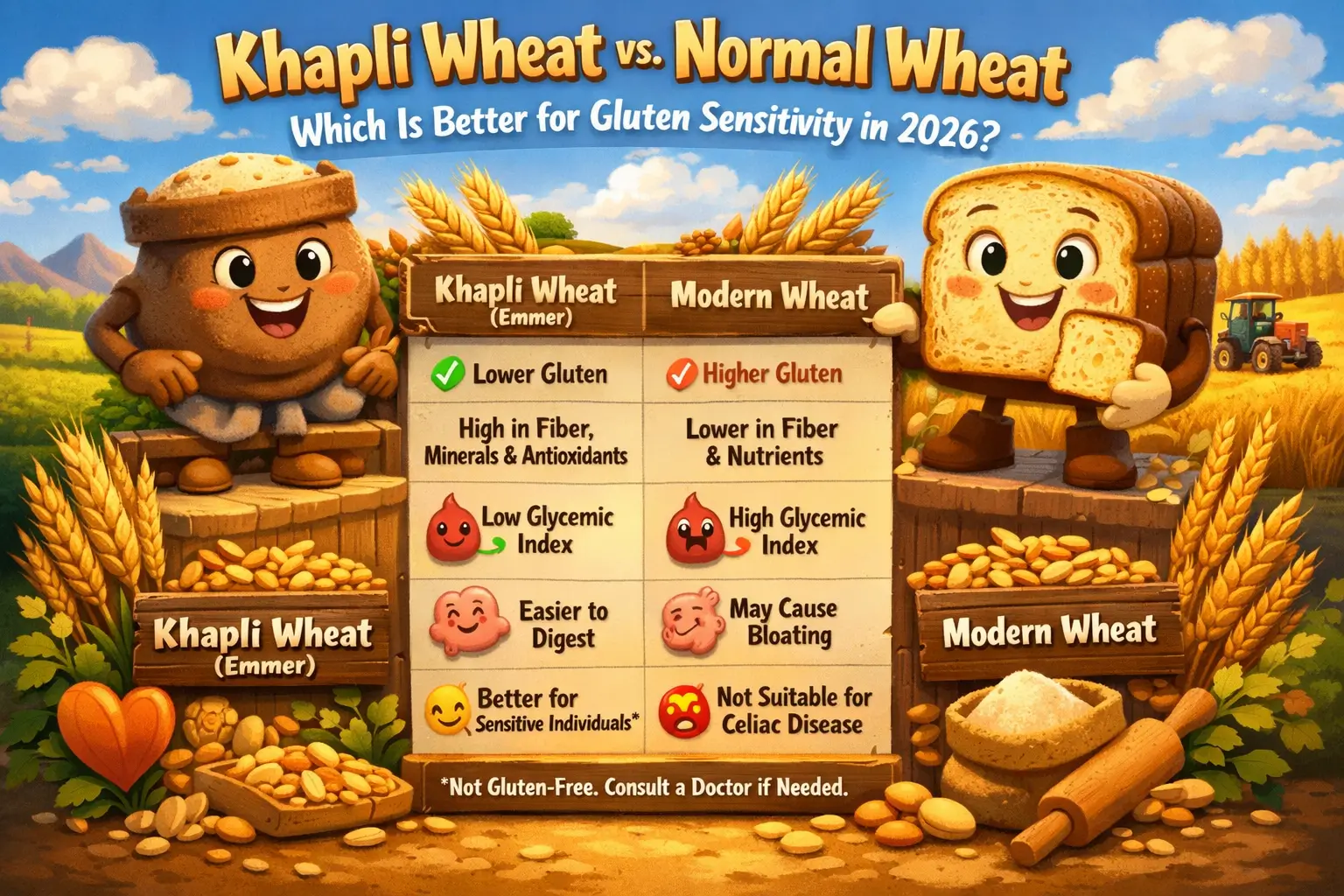
When it comes to nutrition, Khapli wheat and normal wheat have some clear differences, especially for people concerned with digestion, fibre, and blood sugar.
Modern wheat is bred for stronger gluten, which makes it ideal for soft, elastic bread. However, this protein structure can be harder to break down for some individuals, particularly those with mild gluten sensitivity. Khapli wheat has a slightly weaker gluten structure, which some people find gentler on the stomach.
Fibre is another key difference. Khapli wheat is often stone-ground and less processed, retaining more bran and therefore more dietary fibre. This helps digestion, keeps blood sugar levels steadier, and promotes a feeling of fullness after meals.
Here’s a quick comparison:
| Feature | Normal Wheat | Khapli Wheat |
|---|---|---|
| Gluten Strength | High, strong elasticity | Moderate, softer structure |
| Fibre | Moderate | High |
| Glycemic Impact | Moderate to high | Lower |
| Digestibility | Can feel heavy for sensitive individuals | Often easier to digest |
| Micronutrients | Some nutrients are lost in industrial milling | Richer in iron, magnesium, zinc, and B vitamins |
| Processing | Industrial/roller-milled | Traditional stone-ground |
Who Should Consider or Avoid Khapli Wheat?
Khapli wheat is not a one-size-fits-all solution. It can be beneficial for some, but not safe for everyone.
People who should avoid Khapli wheat:
- Anyone with celiac disease – it still contains gluten.
- Those with a wheat allergy or medically advised gluten-free diet.
People who may benefit:
- Individuals with mild gluten sensitivity. Many report feeling less bloated or heavy after meals.
- Those looking for higher fibre intake. Khapli wheat contains up to 30% more fibre than modern refined wheat, depending on the flour.
- People who prefer minimally processed grains. Stone-ground Khapli retains more nutrients than roller-milled modern wheat.
Even if you have no digestive issues, Khapli wheat can be appealing for its nutrient density, traditional cultivation, and slightly lower glycemic impact.
The key is to experiment gradually. Some people start by replacing 25–50% of their normal wheat with Khapli for a week or two before fully switching, giving their body time to adjust.
Taste, Texture and Cooking Differences
One of the first things people notice when they try Khapli wheat is the taste. Compared with modern wheat, it has a nuttier, earthier flavour. Some describe it as slightly sweeter, while others say it adds a rustic note to rotis and parathas. It is a subtle difference, but it becomes more noticeable if you are used to soft, fluffy modern wheat breads.
The texture is different, too. Khapli dough is denser and less elastic because of its weaker gluten. That means:
- You may need 10–15% more water when kneading.
- Letting the dough rest for 20–30 minutes helps it become more pliable.
- Rotis may feel thicker and chewier, which many people actually enjoy.
Cooking with Khapli flour is straightforward, but sourcing good quality makes a difference. Brands such as Anveshan and Two Brothers Organic Farms offer stone-ground Khapli flour that preserves fibre and nutrients. Users often notice that rotis made with these flours stay soft longer and have a richer flavour.
Practical Benefits for Daily Life
Switching to Khapli wheat isn’t about following a trend; it can offer some real, practical benefits in day-to-day life compared to the different types of wheat in India.
Digestive comfort
Many people find Khapli wheat easier on the stomach than modern wheat. Its weaker gluten structure and higher fibre content can reduce bloating and heaviness after meals. Some individuals report feeling lighter within a week or two of incorporating Khapli flour into their diet.
Higher fibre intake
Khapli wheat can contain 20–30% more fibre than refined modern wheat. This helps:
- Promote regular bowel movements
- Support gut health
- Keep you feeling fuller for longer, which can naturally curb snacking
Stable energy levels
Thanks to its slightly lower glycemic impact, Khapli wheat releases glucose more slowly. This can help avoid the energy crashes sometimes felt after eating refined wheat.
Subtle support for weight management
While not a weight-loss miracle, higher fibre and better satiety can help people make healthier choices without feeling deprived.
In short, Khapli wheat can improve digestion, blood sugar stability, and fullness, all in a gentle, natural way that fits easily into daily meals.
2026 Price Comparison: Normal Wheat vs Khapli Wheat in India
Khapli wheat is generally more expensive than modern wheat, and there’s a reason. It is grown in smaller quantities on traditional farms, often stone-ground, which preserves fibre, nutrients, and flavour.
Whether it’s worth it depends on your priorities. If you want high-fibre, minimally processed wheat that may be easier to digest, the extra cost can be reasonable. If you tolerate modern wheat well, there’s no need to switch. The decision comes down to budget, nutrition, and how your body feels.
In 2026, the price gap between regular wheat flour and Khapli wheat flour in India is still noticeable, and it often surprises new buyers:
Normal Wheat Flour (Atta)
- Regular packaged atta typically sells for around ₹45–₹60 per kg in retail outlets.
- Government schemes and local mill prices can be even lower, especially in bulk or subsidised programmes.
Khapli Wheat Flour (Ancient Emmer)
In 2026 India, regular wheat flour costs around ₹45–₹60 per kg, while Khapli flour is priced higher due to smaller production and traditional processing. Top Khapli Wheat Flour Options:
1. Khapli (Emmer Long Wheat) Atta | Two Brothers Organic Farms – Stone‑ground ancient emmer flour with higher fibre and gentler gluten, ideal for everyday rotis and traditional recipes.
2. Sattvic Foods Emmer Wheat Flour – Certified organic emmer (Khapli) wheat flour, minimally processed to preserve nutrients and fibre.
3. Asmita Organic Farms Khapli Wheat Flour 1kg – Low‑GI, high‑fibre stoneground Khapli atta, suitable for daily use and gentler digestion.
4. Praakritik Organic Khapli Atta – Organic Khapli flour option with balanced nutrition and traditional milling.
This means Khapli flour in 2026 is generally 3 to 5 times more expensive than regular wheat flour.
| Brand / Product | Key Feature |
|---|---|
| Khapli (Emmer Long Wheat) Atta | Two Brothers Organic Farms | Premium stone‑ground emmer wheat flour |
| Sattvic Foods Emmer Wheat Flour Pouch | Certified organic Khapli attā |
| Asmita Organic Farms Khapli Wheat Flour 1kg | Low GI Emmer Wheat Atta | Low GI, stoneground Khapli atta |
| Praakritik Organic Khapli Atta | Organic Khapli wheat flour |
The Bigger Picture: Sustainability & Ancient Grain Preservation
Choosing Khapli wheat is not just about digestion or nutrition; it also touches on sustainability and preserving ancient grains.
Modern wheat is often grown on large-scale, monoculture farms, which can deplete soil nutrients and reduce biodiversity. Khapli wheat, on the other hand, is mostly cultivated on smaller, traditional farms, often using methods that are gentler on the land.
By supporting Khapli wheat, you are helping to:
- Preserve an ancient grain that has been cultivated for centuries.
- Promote crop diversity, reducing dependence on a single type of wheat.
- Support small-scale farmers who maintain traditional farming practices.
In this way, choosing Khapli is not just a dietary choice; it’s also a step towards more sustainable and responsible food production.
FAQs: Khapli Wheat vs Normal Wheat
How does Khapli wheat compare to normal wheat for digestion?
Khapli wheat is often easier to digest for people with mild gluten sensitivity because of its weaker gluten and higher fibre. Normal wheat has stronger gluten and is more processed, which can feel heavier for some.
Are both safe for people with gluten sensitivity?
Neither Khapli nor normal wheat is gluten-free. Khapli may be gentler for mild sensitivity, but anyone with celiac disease or a wheat allergy should avoid both.
Which wheat is better for blood sugar levels?
Khapli wheat has higher fibre and a lower glycemic impact, helping maintain steadier energy. Normal wheat can lead to faster sugar spikes due to refined processing.
How do they differ in taste and texture?
Normal wheat produces soft, elastic dough suitable for fluffy bread. Khapli wheat has a nutty flavour, denser texture, and slightly chewier rotis, which some people prefer.
Can I replace normal wheat with Khapli in recipes?
Yes, you can, but Khapli dough may need more water and resting time. For a smoother transition, many people start by mixing Khapli with normal wheat.
Which is more nutritious?
Khapli wheat retains more fibre, iron, magnesium, zinc, and B vitamins thanks to stone-ground processing. Normal wheat is nutritious too, but often loses some nutrients in industrial milling.
Which one is worth buying?
It depends on your priorities. If you want higher fibre, gentler digestion, and minimally processed flour, Khapli is worth considering. If you digest regular wheat well and prefer lower cost and elasticity for baking, normal wheat is perfectly fine.
Final Thoughts: Khapli Wheat vs Normal Wheat
Both Khapli wheat and normal wheat have their place in a balanced diet, and the choice depends on your health goals, digestion, and lifestyle.
Normal wheat is convenient, affordable, and perfect for soft, elastic bread or pasta. It is suitable for most people, but its stronger gluten and refined processing can feel heavy for some, especially those with mild gluten sensitivity.
Khapli wheat, on the other hand, offers higher fibre, gentler gluten, and more preserved nutrients thanks to traditional stone-ground processing. Its nutty flavour and denser texture may take some getting used to, but many people find it easier to digest and more satisfying for everyday meals.
If you are curious, a simple approach is to experiment gradually: start by replacing 25–50% of your regular wheat with Khapli flour, notice how your body feels, and adjust over time.
Ultimately, the best choice is the one that fits your body, taste, and lifestyle. For those willing to invest in a high-fibre, minimally processed grain, Khapli wheat is a valuable addition. For those seeking convenience, affordability, and elasticity, modern wheat remains reliable.