
Baking is often described as an art, but it is also a precise science. Understanding the different types of flour and their uses is essential because the ratio of dry ingredients to liquid greatly affects the texture, structure, and rise of baked goods. Although many flours appear identical, they have different chemical compositions, particularly in terms of protein and starch, which determine how they behave when hydrated and heated.
Flour is a fine powder produced by grinding grains, legumes, nuts, or seeds, and it forms the structural foundation of most baked products. Different flours vary in gluten content, texture, and nutritional value, which makes them suitable for specific recipes.
Some of the most common types of flour used in cooking and baking include:
- All-purpose flour: Versatile for cakes, biscuits, and pancakes
- Bread flour: High protein, ideal for yeast breads and pizza dough
- Cake flour: Low protein, best for light and soft cakes
- Whole wheat flour: Fibre-rich and commonly used for bread and rotis
- Rice flour: Gluten-free flour used in dosas, snacks, and frying.
- Corn flour: Commonly used as a thickener for soups and sauces. It is often confused with corn starch because both look similar, but behave differently in cooking.
- Almond flour: Popular in gluten-free and keto baking
As the global flour market is projected to reach $71.33 billion by 2032, understanding the different types of flour and their uses has become increasingly important for both commercial bakers and home enthusiasts.
Whether you want the perfect stretch for pizza dough, a delicate crumb for sponge cake, or a gluten-free alternative for dietary needs, choosing the right flour is the first step toward achieving professional-quality results.
- Different Types of Flour and Their Uses: A Comparison
- Flour Types by Category
- Understanding Wheat Flour: The Science of Protein and Gluten
- Professional Secrets: The Magic of 00 Flour and Refined Varieties
- The Rise of Ancient Grains and Sustainable Alternatives
- Low-Carb Revolution: A Guide to Keto-Friendly Flours
- Gluten-Free Baking: Overcoming Structural Challenges
- How to Choose the Right Flour for Baking?
- The Sprouted Flour Secret: Enhancing Bioavailability
- FAQs
- Masterclass Conclusion: Choosing Your Flour Power
Different Types of Flour and Their Uses: A Comparison
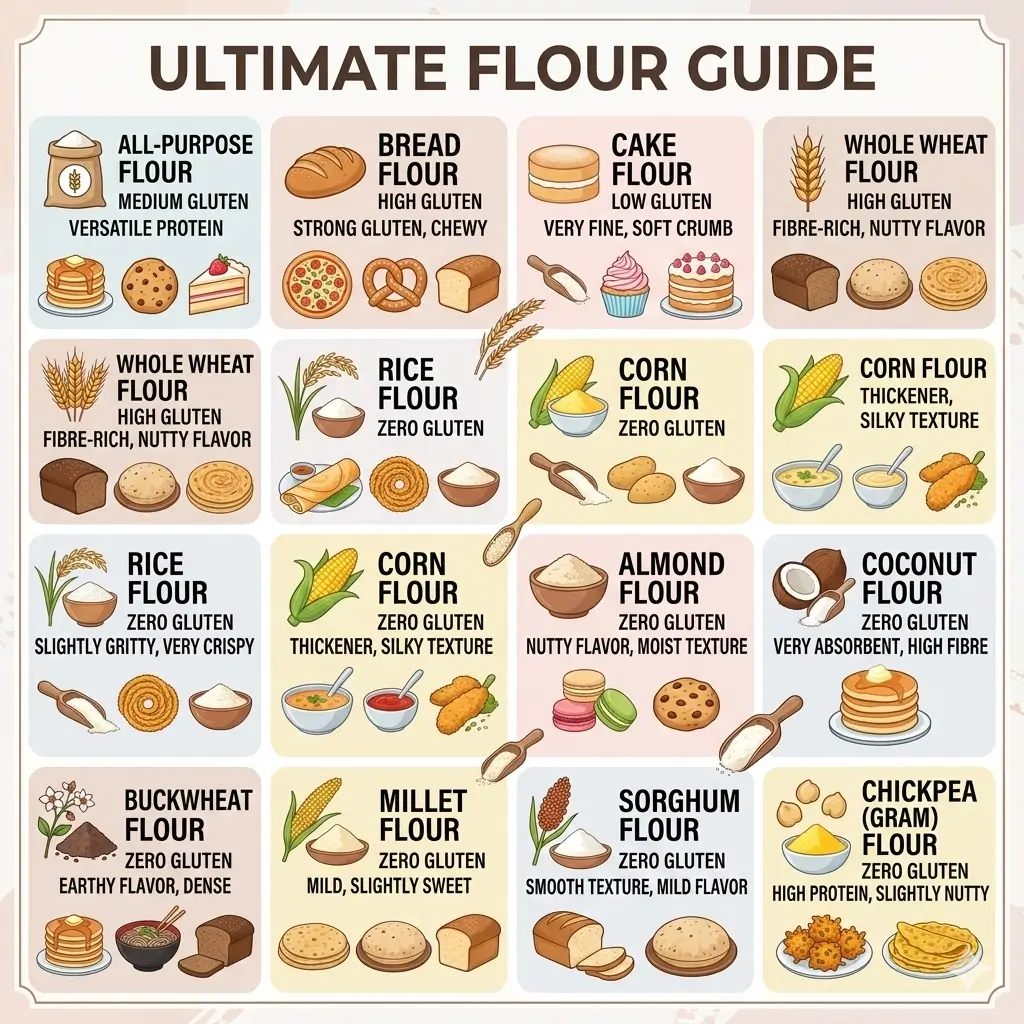
Different types of flour refer to flours made from grains, nuts, seeds, or legumes that vary in protein content, gluten levels, and processing methods. Each flour behaves differently in baking and cooking, influencing texture, elasticity, crispness, and rise.
Common varieties include wheat flour, rice flour, corn flour, almond flour, and speciality flours used for gluten-free or low-carb diets.
Common Types of Flour Used in Baking and Cooking
Some of the most commonly used flours worldwide include:
- All-purpose flour
- Bread flour
- Cake flour
- Whole wheat flour
- Rice flour
- Corn flour
- Almond flour
- Coconut flour
- Buckwheat flour
- Millet flour
- Sorghum flour
- Chickpea (gram) flour
Each of these flours has unique protein levels, gluten properties, and culinary applications, which influence the texture and structure of baked goods. Below is a breakdown of the most common staples.
| Flour Type | Best Use Case | Gluten Level | Main Characteristic |
|---|---|---|---|
| All-purpose flour | Cakes, cookies, pancakes, biscuits | Medium | Versatile, balanced protein |
| Bread flour | Yeast breads, pizza dough, bagels | High | Strong gluten, chewy texture |
| Cake flour | Sponge cakes, cupcakes, pastries | Low | Very fine, soft crumb |
| Whole wheat flour | Rotis, bread, paratha | High | Fibre-rich, dense, nutty flavour |
| Rice flour | Dosa, murukku, frying | Zero | Slightly gritty, very crispy |
| Corn flour | Soups, sauces, coating | Zero | Thickener, silky texture |
| Almond flour | Keto baking, cookies, macarons | Zero | Nutty flavour, moist texture |
| Coconut flour | Gluten-free baking, pancakes | Zero | Very absorbent, high fibre |
| Buckwheat flour | Pancakes, soba noodles, gluten-free bread | Zero | Earthy flavour, dense |
| Millet flour | Flatbreads, rotis, gluten-free baking | Zero | Mild, slightly sweet |
| Sorghum flour | Gluten-free bread, cakes, rotis | Zero | Smooth texture, mild flavour |
| Chickpea (gram) flour | Pakoras, chilla, gluten-free baking | Zero | High protein, slightly nutty |
Flour Types by Category
Flours can also be grouped based on their protein content and gluten properties, which determine how they behave in baking.
| Category | Flour Types | Best For |
|---|---|---|
| High-Protein Flours | Bread flour, whole wheat flour, chickpea flour | Yeast breads, pizza dough |
| Low-Protein Flours | Cake flour, all-purpose flour | Cakes, cookies, pastries |
| Gluten-Free Flours | Rice flour, corn flour, almond flour, coconut flour, sorghum flour | Gluten-free baking |
Understanding Wheat Flour: The Science of Protein and Gluten
The primary differentiator between wheat-based flours is their protein content, also known as gluten.
When wheat protein is hydrated, molecules bond to form “slinky-looking” structures that can expand, stretch, and hold gas, allowing dough to rise and maintain its shape.
High-Protein vs. Low-Protein Flours
Selecting flour based on its protein percentage ensures the texture of your bake aligns with your goals. Low-protein flours produce delicate, flaky results, while high-protein flours create strong, chewy doughs.
- Cake Flour (5–8% Protein): Milled from soft wheat, this variety produces the least amount of gluten. It is a “must-have” for airy, moist treats like angel food cakes, pound cakes, and sponge cakes.
- Pastry Flour (8–9% Protein): Also ground from soft white wheat, pastry flour has a gluten content low enough for flakiness but high enough for tender cookies, tarts, and muffins.
- All-Purpose Flour (10–12% Protein): A versatile blend of hard and soft wheat, this is the industry “go-to” for brownies, pancakes, and biscuits. If kneaded thoroughly, it can even develop enough gluten for adequate yeast breads.
- Bread Flour (12–14% Protein): Ground from hard wheat, its high protein content provides the elasticity and structure required for strong rises in challah, pizza dough, and artisan loaves.
- Whole Wheat Flour (13–15% Protein): Unlike refined flours, this is ground from the entire wheat berry, including the germ and bran. This makes it nutritionally richer than refined wheat flour, such as maida. For a deeper comparison of their nutritional value and baking uses, see maida vs wheat flour.
Expert Tip: Factors Affecting Gluten Development
Beyond choosing the right flour, bakers can manipulate gluten through technique.
Gluten increases with kneading and the addition of salt, whereas sugar and fat naturally decrease gluten formation, leading to a more tender crumb.
Professional Secrets: The Magic of 00 Flour and Refined Varieties
For those seeking authentic Neapolitan-style pizza or silky fresh pasta, 00 flour (doppio zero) is considered the gold standard.
Unlike American flours, categorised by protein, European flours like 00 are categorised by how finely they are ground.
Texture and Behaviour
00 flour is ground to a powder-fine consistency. This allows it to create a smooth, pliable dough that stretches easily without tearing.
Protein Profile
Most 00 flour in the U.S. is ground from durum wheat and has a mid-range protein content of 11–12%, similar to all-purpose flour.
However, because durum wheat gluten is strong but less elastic than red wheat, it results in a “nice bite” with a tender interior and a crispy exterior.
In regional cuisines, Maida In regional cuisines, maida serves a similar role as a highly refined wheat flour. It is prized for its fine texture and elasticity, making it ideal for bhatura, naan, and pastries. However, it differs significantly from whole wheat flour in fibre content and processing, which you can explore in maida vs wheat flour.
It also behaves differently from corn-based flours when used in batters or coatings, as explained in corn flour vs maida. It is prized for its fine, white appearance and high stretchability, making it the primary choice for traditional items like bhatura, naan, and delicate pastries.
The Rise of Ancient Grains and Sustainable Alternatives
Consumer awareness is shifting towards nutrient-dense and eco-friendly ingredients.
The ancient grains market is expected to grow by $50 million by 2028 as bakers forgo all-purpose flour for varieties like spelt, einkorn, and buckwheat.
Why Switch to Ancient Grains?
Ancient grains are those that have remained unchanged by selective breeding for centuries. They offer complex flavours and superior nutrition.
- Nutrient Density: These grains generally contain more protein, fibre, vitamins, and antioxidants than refined flours.
- Sustainability: Crops like millet and sorghum grow well in harsh conditions, requiring less water and fewer pesticides than modern wheat.
- Flavour Profiles: Bakers describe amaranth and teff as “earthy”, Kamut as “buttery”, and sorghum as “slightly sweet”.
Incorporating Speciality Flours
Most whole-grain flours are not 1-to-1 replacements for all-purpose flour.
Substituting too much can make a bake dry or weaken the structure due to lower gluten levels.
Experts recommend replacing portions of flour gradually to find the right balance of taste and texture.
Low-Carb Revolution: A Guide to Keto-Friendly Flours
For those following a ketogenic lifestyle, traditional wheat flour, which contains 70–75g of net carbs per 100g, is avoided to maintain ketosis.
Instead, low-carb alternatives derived from nuts, seeds, and plant fibres are used.
The Best Keto Flour Options
- Almond Flour (10g Net Carbs): Made from blanched almonds, this is the most popular keto staple for cakes, cookies, and pizza bases.
- Coconut Flour (9g Net Carbs): Highly absorbent and fibre-rich, it requires significantly more liquid and eggs than other flours.
- Lupin Flour (7g Net Carbs): Boasts the highest protein content (40g per 100g) of any keto flour, making it excellent for bread and pasta.
- Bamboo Flour (Nearly 0g Net Carbs): Consists of 90% fibre and is used primarily to improve texture and structure in flour blends.
- Flaxseed Flour (1g Net Carbs): Rich in Omega-3 fatty acids, it acts as an excellent binding agent and egg replacement.
Note on Substitutions: Keto flours behave differently from wheat. For instance, coconut flour is so absorbent that you only use about 1/4 of the amount compared to wheat flour.
Gluten-Free Baking: Overcoming Structural Challenges
Developing high-quality gluten-free (GF) products is a major technological challenge because alternative flours lack the viscoelastic properties of wheat protein.
Essential GF Flour Varieties
- Rice Flour: Often used for its phytochemical compounds and “good eating quality”. Because it is gluten-free, it behaves differently from wheat flour in baking. If you want to understand the texture differences between the two, read wheat flour vs rice flour.
- Corn Flour (Maize): Acting as a powerful thickener, corn flour provides a silky texture to soups and sauces. However, it produces different results compared with rice flour in frying and baking applications, which you can see in corn flour vs rice flour.
- Buckwheat Flour: Capable of enhancing bread quality with high fibre content and a distinct “crispness” in biscuits.
- Millet and Sorghum: Common in Indian roti and Korean cakes, these grains provide earthy flavours but often require additives to prevent a brittle crumb.
Functional Additives for Success
To imitate the role of gluten, GF bakers rely on hydrocolloids and enzymes.
- Xanthan Gum (XG): The most common additive for increasing batter stability, elasticity, and crumb structure.
- Psyllium Husk: Essential for keto and GF bread, it provides the chewy, “bread-like” elasticity that mimics gluten.
- Enzymes: Proteases and transglutaminase are used to improve gas retention, leading to higher loaf volume and softer crumbs.
How to Choose the Right Flour for Baking?
Selecting the right flour depends on the texture and structure you want in your recipe.
Use High-Protein Flour When
- Making yeast bread
- Preparing pizza dough
- Baking chewy bagels
High-protein flours like bread flour create strong gluten networks that trap gas and produce a good rise.
Use Low-Protein Flour When
- Baking soft cakes
- Making cookies
- Preparing delicate pastries
Cake flour and pastry flour produce lighter, softer crumbs because they generate less gluten.
Use Gluten-Free Flour When
- Cooking for gluten intolerance
- Making dosa, pancakes, or crispy coatings
Flours such as rice flour, almond flour, and sorghum flour are popular gluten-free alternatives.
The Sprouted Flour Secret: Enhancing Bioavailability
Sprouted flours made from grains and lentils are gaining popularity as healthy alternatives.
The natural process of sprouting stimulates enzymes that break down starches, increasing the bioavailability of vitamins and nutrients and making the flour easier to digest.
Benefits in the Kitchen
- Reduced Fermentation: Sprouted flours have lower fermentation times, which can increase productivity in commercial settings.
- Superior Texture: Bread made with sprouted flour is often less bitter, has a higher loaf volume, and stays fresh longer.
- Flavour Enhancement: Sprouted flours produce a naturally sweeter flavour and rich crust when toasted or grilled.
FAQs
What are the main types of flour used in baking?
The most common types of flour used in baking include all-purpose flour, bread flour, cake flour, pastry flour, whole wheat flour, rice flour, and almond flour. Each type has a different protein content, which affects the texture, elasticity, and structure of baked goods.
Which flour is best for baking cakes?
Cake flour is the best flour for cakes because it has a low protein content (5–8%), which produces less gluten. This results in a lighter, softer, and more delicate crumb compared to cakes made with all-purpose or bread flour.
What is the difference between all-purpose flour and bread flour?
The main difference is protein content. Bread flour contains 12–14% protein, which forms stronger gluten and makes it ideal for yeast breads and pizza dough. All-purpose flour has 10–12% protein, making it more versatile for cakes, biscuits, pancakes, and cookies.
Which flours are gluten-free?
Common gluten-free flours include rice flour, almond flour, coconut flour, buckwheat flour, sorghum flour, and millet flour. These flours do not contain wheat protein, so they are suitable for people with gluten intolerance or coeliac disease.
Can different types of flour be substituted in recipes?
Some flours can be substituted, but not all flours work as a 1:1 replacement. For example, all-purpose flour can often replace cake flour with minor adjustments, but gluten-free flours such as almond or coconut flour usually require additional binders like eggs or xanthan gum.
What flour is best for pizza dough?
Many professional bakers prefer 00 flour for pizza dough because it is very finely ground and produces a smooth, elastic dough. Bread flour is also commonly used because its higher protein content creates a chewy and structured crust.
How should flour be stored to keep it fresh?
Refined flours such as all-purpose flour can be stored in an airtight container in a cool, dry place for 6–12 months. Whole-grain, nut, and seed flours contain natural oils and should be refrigerated or frozen to prevent them from becoming rancid.
Masterclass Conclusion: Choosing Your Flour Power
Selecting the right flour is more than a culinary choice; it is a strategic decision based on the science of protein, the fineness of the grind, and nutritional goals.
By mastering the differences between traditional wheat flours, embracing the health benefits of ancient grains, and utilising the functional strengths of keto alternatives, you can transform your kitchen into a centre of professional baking excellence.
Whether you’re reaching for Maida to make authentic bhatura or lupin flour for a high-protein keto loaf, let the science of flour guide your next masterpiece.