
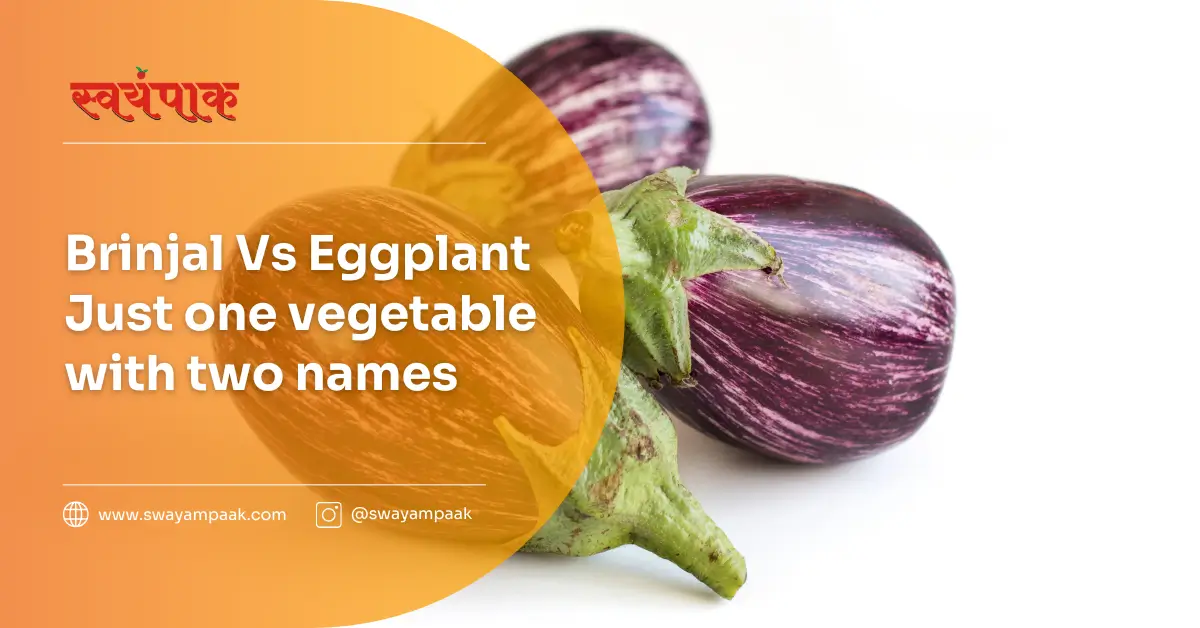
Brinjal vs Eggplant: One Vegetable, Three Names.
Yes. When we talk about Brinjal vs Eggplant, we are referring to the same vegetable, Solanum melongena. The difference is purely regional: “Brinjal” is used in South Asia, “Eggplant” in North America/Australia, and “Aubergine” in Europe. While botanically identical, they vary in shape and size depending on the local variety.
- The Linguistic Journey: Why the Names Differ?
- The "White Egg" History: Why is it Called Eggplant?
- Global Varieties & Their Best Uses
- Quick Reference: Which One Should You Buy?
- Swapping Brinjal for Eggplant: 3 Rules to Follow
- The Expert Selection Guide: How to Pick the Best Brinjal?
- Niche Varieties You Need to Try
- Storage Secrets: How to Keep Them Fresh Longer?
- Is it Healthier to Call it a Brinjal?
- Conclusion & Recipe Links
- FAQs
The Linguistic Journey: Why the Names Differ?
The reason this single vegetable (Solanum melongena) has three distinct identities is rooted in history, global trade, and visual appearance.
- Brinjal: This term is a linguistic traveller. It evolved from the ancient Sanskrit word vatingana, which moved to the Persian badingan, then to the Portuguese bringella, finally landing as “Brinjal” in India, South Asia, and Southeast Asia.
- Eggplant: This name is purely visual. In the 18th century, the varieties grown in the US and Europe were small, white, and oval-looking, exactly like hen’s eggs hanging from a bush. Though most modern versions are large and purple, the name “Eggplant” stuck in North America and Australia.
- Aubergine: Derived from French and Arabic roots, this is the standard term in the UK and Europe. It typically refers to the deep purple, elongated varieties common in Mediterranean cooking.
The “White Egg” History: Why is it Called Eggplant?
If you have only ever seen large, purple brinjals, the name “eggplant” might seem confusing. However, the history of this name is a perfect example of how visual traits define language.
In the 18th century, the varieties brought to Europe and the United States from Asia were not the deep purple giants we see today. Instead, they were small, oval-shaped, and pure white. When hanging from the plant, they looked exactly like a cluster of hen’s eggs.
While farmers eventually bred the vegetable to be larger and darker to improve yield and shelf life, the name “Eggplant” remained the standard in the West. Today, these “White Egg” heirloom varieties are making a comeback in farmers’ markets and are prized for their extremely mild, non-bitter flavour.
Global Varieties & Their Best Uses
While they share a species, the variety you find in a local Indian mandi is very different from one in a Western supermarket. Using the wrong one can change the texture of your dish.
- Indian Brinjal (Small/Round): Small, egg-shaped, and usually dark purple or green-streaked. They have thin skins and tender flesh, making them the best choice for Bharli Vangi (Stuffed Brinjal) or Ennai Kathirikai.
- Globe Eggplant (The American Classic): Large, pear-shaped, and heavy. These have thicker skins and a meatier texture. They are ideal for Eggplant Parmesan, “steaks,” or grilling.
- Japanese & Chinese Eggplant: Long, thin, and pale purple. These are virtually seedless and have a delicate flavour. They don’t turn mushy as easily, making them perfect for Stir-fries.
- Thai Brinjal: Small, crunchy, and green or white. Unlike other types of eggplants, these are often eaten raw or dropped into Thai Green Curries.
Quick Reference: Which One Should You Buy?
To make your shopping easier, match the variety to your specific cooking style with this quick reference guide.
| Variety | Texture | Flavour | Best Recipe |
| Small Indian Brinjal | Soft & Creamy | Mildly Sweet | Stuffed Brinjal, Curries |
| Globe Eggplant | Meaty & Dense | Earthy/Slightly Bitter | Slicing, Grilling, Moussaka |
| Japanese Brinjal | Delicate & Firm | Sweet | Stir-fry, Glazing |
| Thai Brinjal | Crunchy/Seedy | Bitter/Fresh | Thai Green Curry |
Swapping Brinjal for Eggplant: 3 Rules to Follow
If your recipe calls for one but you only have the other, don’t worry! You can successfully swap them if you follow these three professional culinary rules:
Rule 1: Salt Your Eggplant (The “Sweating” Method)
Larger Western varieties (Globe eggplants) contain more alkaloids, which can lead to a bitter aftertaste.
- The Pro Tip: Slice or cube the eggplant, sprinkle generously with salt, and let it sit for 20 minutes. Rinse off the bitter liquid “beads” before cooking. Small Indian brinjals are usually sweet enough to skip this step.
Rule 2: Adjust Your Cooking Time
Because of their size and water content, small Indian brinjals cook nearly 2x faster than large Globe varieties.
- The Adjustment: If substituting a large eggplant into a curry, cut it into smaller cubes and give it a 5-minute head start in the pan before adding other quick-cooking vegetables.
Rule 3: Mind the Skin Thickness
The skin of a small brinjal is tender and edible. However, as the vegetable grows larger, the skin becomes leathery and tough.
- The Solution: If your eggplant feels tough to the touch, “zebra-peel” it (remove strips of skin) or peel it entirely to ensure a smooth mouthfeel in your final dish.
The Expert Selection Guide: How to Pick the Best Brinjal?
A common reason people dislike brinjal or eggplant is that they accidentally buy an overripe, bitter specimen. Whether you are at a local Indian mandi or a supermarket, use this checklist to ensure you get the best quality:
- The Weight Test: Pick up the vegetable. It should feel surprisingly heavy for its size. A light eggplant usually means it has lost moisture, and the seeds inside have become tough and bitter.
- The Shine Factor: The skin should be smooth and mirror-like. Dull skin is a tell-tale sign that the vegetable was harvested too long ago and has lost its freshness.
- The “Poke” Test: Gently press the side of the eggplant with your thumb. If it is fresh, the skin will spring back immediately. If your thumb leaves a permanent dent, it is overripe and likely full of brown, bitter seeds.
- Check the Stem: The “cap” or stem should be a vibrant, bright green. Avoid any with brown, shrivelled, or mouldy stems, as this indicates decay starting from the top down.
Niche Varieties You Need to Try
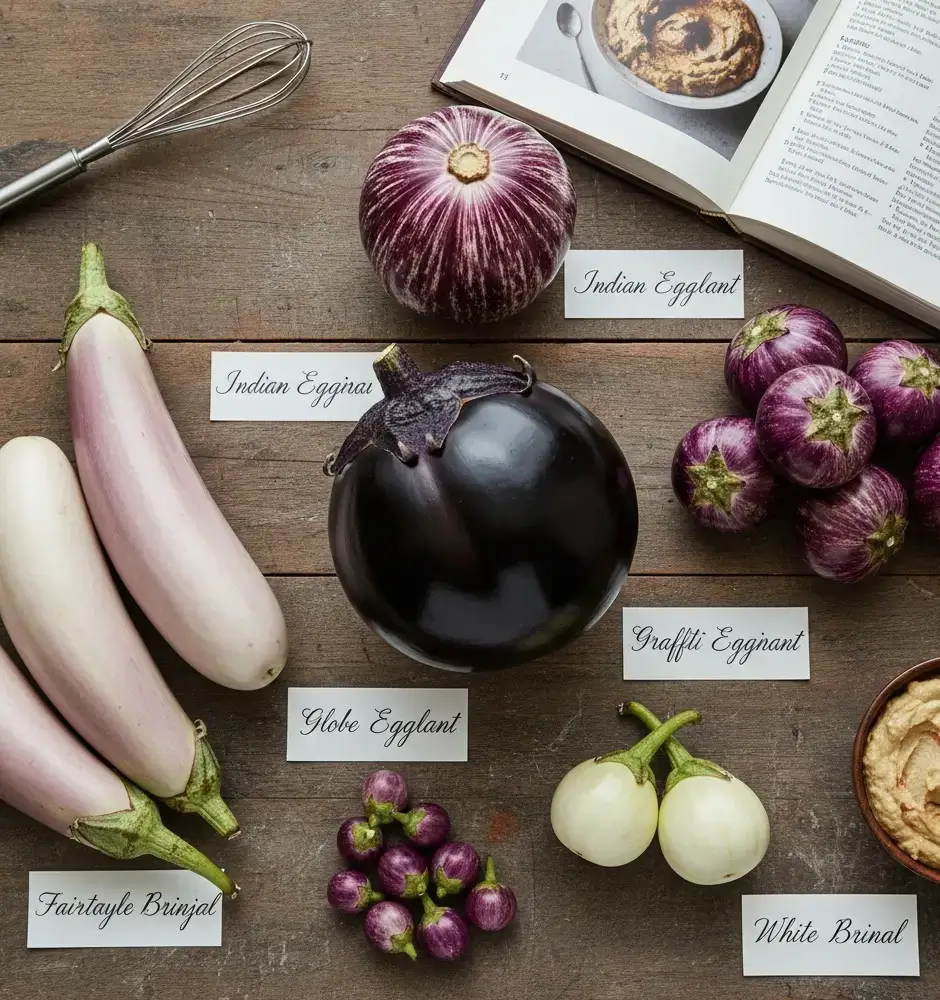
To truly understand the Brinjal vs Eggplant world, you should look beyond the standard purple types. Expanding your pantry to include these varieties will elevate your cooking:
- Italian Eggplant: Similar to the Globe variety but smaller and slightly sweeter. It is the gold standard for roasting and making dips like Baba Ganoush.
- Graffiti (Sicilian) Eggplant: Recognisable by its beautiful purple and white stripes. It has a very thin skin and a fruity, almost berry-like undertone. It does not require peeling or salting.
- Fairytale Eggplant: These are tiny, palm-sized, and incredibly creamy. Because they are so small, they cook in minutes and are perfect for quick pan-roasting or grilling on skewers.
- White Brinjal: Common in parts of India, these are often firmer than the purple ones and hold their shape beautifully in thick, spicy gravies.
Storage Secrets: How to Keep Them Fresh Longer?
Many people make the mistake of tossing their brinjals straight into the refrigerator. However, these are tropical plants and are sensitive to “chill injury.”
- Avoid the Coldest Spots: If you store them below 10°C (50°F), they can develop pits in the skin and turn mushy. If you must use the fridge, keep them in the vegetable crisper drawer wrapped in a paper towel to absorb moisture.
- The Ethylene Factor: Brinjals are very sensitive to ethylene gas. Keep them away from “gas-producing” fruits like apples, bananas, and tomatoes, which will cause them to rot prematurely.
- Use Within a Week: Unlike potatoes or onions, eggplants have a short shelf life. For the best flavour, try to cook them within 3 to 5 days of purchase.
Is it Healthier to Call it a Brinjal?
Whether you call it brinjal or eggplant, the nutritional benefits remain the same. This vegetable is a “superfood” for the brain and gut.
- Nasunin Power: The deep purple skin is rich in Nasunin, a potent antioxidant that helps protect brain cell membranes from oxidative stress.
- High in Fibre: Just one cup provides about 10% of your daily fibre needs, aiding in digestion and weight management.
- Heart Healthy: Naturally low in calories and sodium, it’s a perfect volume-food for heart-healthy diets.
Conclusion & Recipe Links
The “Brinjal vs Eggplant” debate really comes down to where you are in the world. While they are the same species, their regional variations offer a world of culinary possibilities. From the creamy textures of Indian curries to the meaty bite of a Western roast, this versatile vegetable belongs in every kitchen.
FAQs
Can you substitute eggplant for brinjal in Indian recipes?
Yes, you can substitute them since they are the same species. However, because Western eggplants (Globe varieties) are much larger and have thicker skin than Indian brinjals, you should peel the skin and dice them into smaller pieces to ensure they cook through at the same rate as the rest of your curry.
Why is my eggplant or brinjal bitter, and how do I fix it?
Bitterness is usually caused by the vegetable being overripe or having too many seeds. To fix this, slice the vegetable, sprinkle it with salt, and let it sit for 20 minutes (a process called “sweating”). Rinse off the bitter liquid that beads on the surface before cooking.
Is it necessary to peel brinjal or eggplant before cooking?
It depends on the size. Small brinjals and Japanese varieties have very tender skin that adds texture and nutrition. However, large Globe eggplants often have tough, leathery skin that can be unpleasant to eat. If the skin feels thick, it is better to peel it or “zebra-peel” it in strips.
Why does cut brinjal turn black, and is it safe to eat?
When the flesh of a brinjal is exposed to air, it undergoes oxidation, similar to an apple. While it is perfectly safe to eat, it can look unappealing. To prevent this, keep cut pieces submerged in a bowl of water with a pinch of salt or a squeeze of lemon until you are ready to cook.
Are the seeds inside a brinjal or eggplant poisonous?
No, the seeds are not poisonous and are completely edible. However, in older, larger vegetables, the seeds can become hard and bitter. If you find an eggplant with very dark, tough seeds, you may want to scoop them out with a spoon before preparing your dish for a smoother texture.