
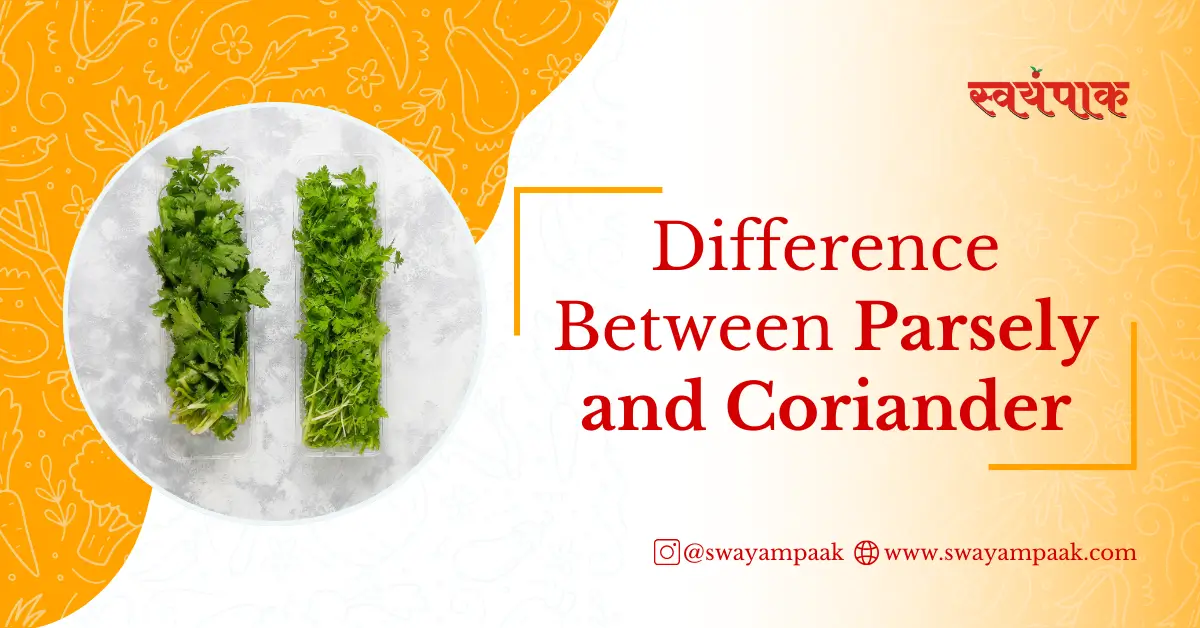
Understanding the difference between parsley and coriander is essential for any home cook, as using the wrong herb can completely shift the flavour profile of your dish from Mediterranean fresh to citrusy-bold.
Whether you are looking for the clean, peppery finish of Italian Parsley or the bold, citrusy punch of Coriander, this guide breaks down the visual markers, the genetic science behind the “soapy” taste, and the professional chef secrets for using both.
The Quick difference is:
- Visual: Parsley has pointed, serrated leaves; Coriander has rounded, clover-like leaves.
- Flavour: Parsley is a mild “balancer”; Coriander is a zesty “driver.”
- Best For: Use parsley for Mediterranean and Western dishes; use coriander for Mexican, Thai, and Indian cuisines.
- The Real Difference Between Parsley and Coriander
- Botanical Profiles & Scientific Distinction
- Parsley vs Coriander: Nutritional & Culinary Breakdown
- Nutritional Powerhouse Comparison
- Culinary Rules of Engagement
- The Substitution Dilemma
- The "Longevity" Hack: How to Keep Herbs Fresh for 14+ Days?
- Nutrition & Health "Quick Facts"
- Conclusion: Which Herb Wins the Plate?
- FAQs
The Real Difference Between Parsley and Coriander
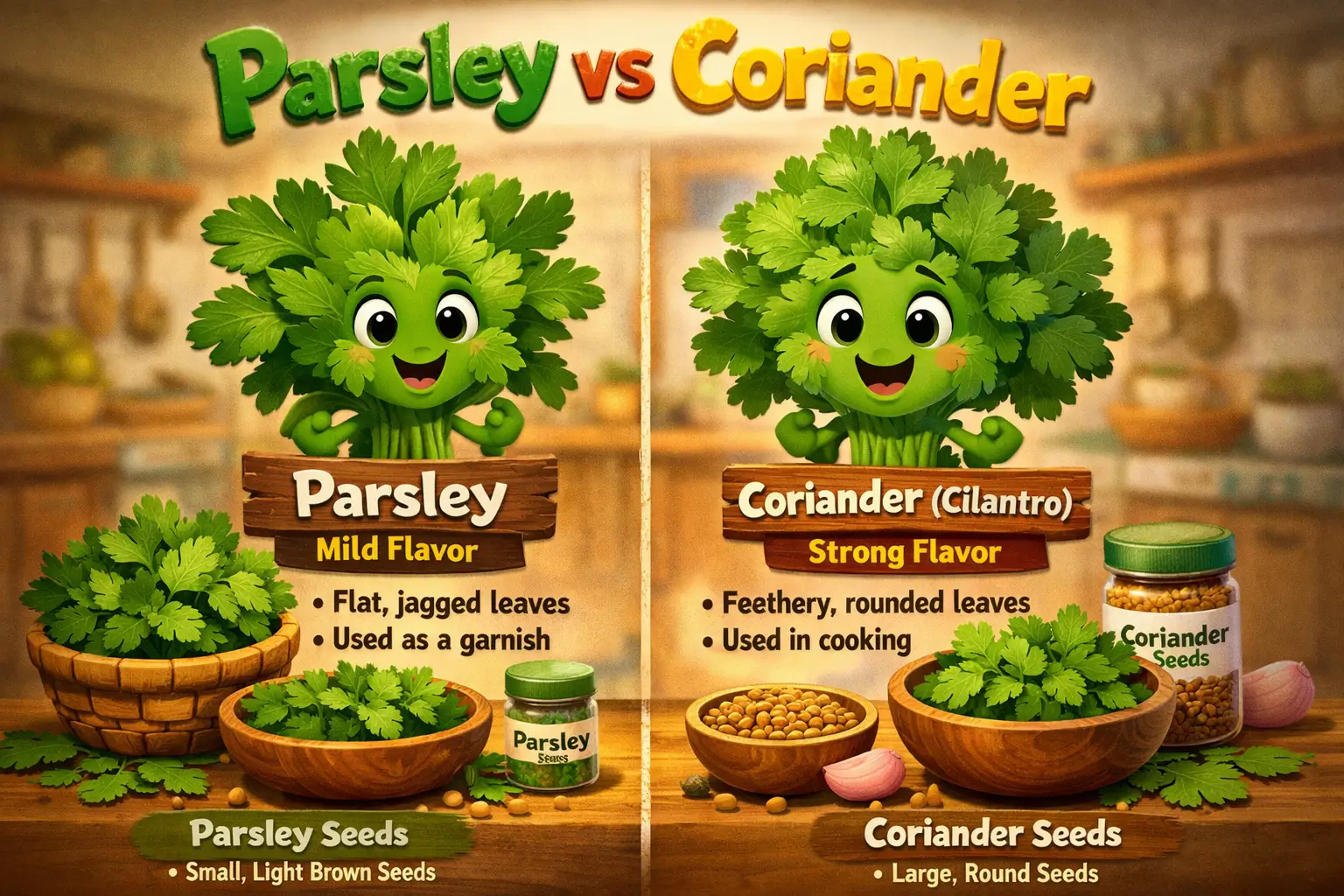
Mistaking parsley for coriander (cilantro) is a rite of passage in the kitchen, but the two herbs couldn’t be more different. While they share a family tree, their chemical compositions and the way they interact with your taste buds are worlds apart.
The 10-Second Cheat Sheet
- If you’re at the grocery store right now, here is how to tell them apart:
- The Taste: Parsley is a mild “flavour balancer.” Coriander is a bold “flavour driver.”
- Look at the leaves: Parsley leaves are typically pointed and serrated. Coriander leaves are more rounded and “clover-like.”
- The Smell Test: Parsley smells clean and grassy. Coriander has a pungent, citrusy, and slightly spicy aroma.
Botanical Profiles & Scientific Distinction
Parsley (Petroselinum crispum)
Parsley is the workhorse of Western cuisine. It contains high levels of apiol, an essential oil that provides a clean, peppery finish. It acts as a palate cleanser, which is why it’s often paired with garlic and butter.
- Italian Flat-Leaf: Preferred by chefs for its robust flavour and heat resistance.
- Curly Leaf: Mostly used as a textural garnish due to its milder, muted flavour.
Coriander/Cilantro (Coriandrum sativum)
Known as “Cilantro” in North America and “Coriander” in the UK and Australia, this herb is a staple in global spice routes. Its flavour comes from aldehydes, which create that signature zesty, floral punch.
The Genetic Secret: About 4–14% of the population possesses the OR6A2 gene. To these individuals, the aldehydes in coriander smell and taste like soap. If you’re cooking for a crowd, it’s always safer to serve coriander on the side!
Parsley vs Coriander: Nutritional & Culinary Breakdown
| Feature | Parsley (Flat/Curly) | Coriander (Cilantro) |
| Primary Nutritional Win | Vitamin K Powerhouse (70% DV per tbsp) | Heavy Metal Detox (Chelation properties) |
| Health Benefits | Bone health & Kidney support | Digestive aid & Anti-inflammatory |
| Vitamins & Minerals | High Vitamin C, A, and Iron | Good source of Vitamin A, C, and Potassium |
| Flavor Profile | Grassy, clean, slightly peppery | Bold, citrusy, zesty (or soapy) |
| Best Used Raw | Salads (Tabbouleh), Garnishes | Salsas, Guacamole, Chutneys |
| Best Used Cooked | Stews, Soups, Meatballs | Curry Pastes (Stems/Roots only) |
| Heat Tolerance | Moderate: Retains flavour in short simmers | Low: Flavour disappears with heat |
| Global Cuisines | French, Italian, Middle Eastern | Mexican, Indian, Thai, Vietnamese |
Nutritional Powerhouse Comparison
According to the latest 2026 food science data, these herbs aren’t just garnishes; they are “super-herbs.”
| Nutrient (per 100g) | Parsley (Flat-Leaf) | Coriander (Cilantro) | Why it Matters |
| Vitamin K | 1,640 μg (13x DV) | 310 μg (2.5x DV) | Parsley is elite for bone density. |
| Vitamin C | 133 mg (147% DV) | 27 mg (30% DV) | Parsley boosts immunity 5x more. |
| Iron | 6.2 mg (34% DV) | 0.6 mg (3% DV) | Parsley is the winner for anaemia. |
| Key Property | Palate Cleanser | Heavy Metal Detox | Coriander binds to toxins (chelating). |
Culinary Rules of Engagement
Knowing the difference is one thing; knowing when to use them is where the magic happens. These two herbs are rarely interchangeable because they react differently to heat and fat.
When to Reach for Parsley
Parsley is a “Support Herb.” It’s designed to enhance other ingredients without stealing the spotlight.
- Best For: Gremolata, Chimichurri, Tabbouleh, and butter-based sauces (like Beurre Maître d’Hôtel).
- Cooking Tip: Parsley is surprisingly hardy. You can add flat-leaf parsley midway through cooking stews or stocks; it will release a deep, earthy base note that rounds out the dish.
- The “Secret” Use: Use parsley stems! They hold more flavour than the leaves and are perfect for bouquet garni or flavouring stocks.
- Use Parsley for: Middle Eastern Tabbouleh, French sauces (Béarnaise), Italian Gremolata, and slow-simmered stews. Parsley is heat-stable, meaning it won’t lose its flavour when boiled.
When to Reach for Coriander (Cilantro)?
Coriander is a “Lead Herb.” It defines the identity of a dish.
- Best For: Salsas, Guacamole, Pad Thai, Phở, and Curries.
- Cooking Tip: Never boil coriander. Heat destroys the delicate oils that give the herb its citrusy zing. Always stir it in at the very last second or use it as a raw topping to preserve its vibration.
- The Global Twist: Unlike parsley, the roots of the coriander plant are highly prized in Thai cooking for curry pastes. They have a deeper, peppery flavour that survives intense heat better than the leaves.
- Use Coriander for: Mexican Salsas, Thai Green Curries, Indian Chutneys, and Vietnamese Phở. Coriander is heat-sensitive; you must add it raw at the very end to preserve its citrusy zing.
The Substitution Dilemma
“Can I use parsley if I don’t have coriander?” The short answer is: No. If a recipe calls for coriander and you use parsley, the dish will lack the necessary acid and zest. If you must substitute, follow these 2026 “Pro-Chef” recommendations:
| If you lack | Use this instead | Why? |
| Coriander | Thai Basil + Lime Zest | Mimics the floral and citrus notes. |
| Parsley | Chervil or Celery Leaves | Provides that same “green,” grassy freshness. |
| Coriander Seeds | Caraway Seeds | Shares a similar earthy, anise-like undertone. |
The “Longevity” Hack: How to Keep Herbs Fresh for 14+ Days?
Fresh herbs are notorious for turning into “fridge slime” within 48 hours. Whether it’s parsley or coriander, the secret to longevity is treating them like a bouquet rather than a head of lettuce.
The “Hydro-Fridge” Method
This technique works for both, but it’s critical for coriander, which is more prone to wilting.
- Trim the Bottoms: Cut about 1 cm off the stems to open up the vascular system.
- The Water Jar: Place the bundle in a jar with about 2 inches of fresh water. Do not wash them yet.
- The “Greenhouse” Cover: Loosely drape a reusable silicone bag or a recycled plastic bag over the leaves. This maintains the high humidity these herbs crave while allowing them to breathe.
- The Fridge Door: Store the jar in the fridge. Change the water every 2–3 days.
Can You Freeze Them?
- Parsley: Yes. Chop it up, put it in an ice cube tray, and cover with olive oil. It’s perfect for dropping straight into a hot pan for sautéing.
- Coriander: No. The leaves are too delicate; once thawed, they turn black and lose their citrus aroma. If you must save coriander, blend it into a pesto with oil and freeze the paste.
Nutrition & Health “Quick Facts”
Here is the 2026 breakdown:
- Parsley: The Vitamin K Powerhouse. Just a tablespoon of parsley provides over 70% of your daily Vitamin K needs, essential for bone health and blood clotting.
- Coriander: The Heavy Metal Detox. While still being studied, coriander is often cited in holistic medicine for its ability to bind to heavy metals (chelation) and help flush them from the body. It is also an excellent digestive aid.
Conclusion: Which Herb Wins the Plate?
In the discussion of the difference between parsley and coriander, there is no superior herb, only the right tool for the right job.
- Reach for Parsley when you want to add a “green,” earthy freshness to pastas, stews, or grilled meats without overpowering the main ingredients.
- Reach for Coriander when you need a vibrant, citrusy high note to cut through spice or heavy fats in salsas, curries, and stir-fries.
Pro Tip for 2026: Always check your guest list before heavy-handed coriander use. With the OR6A2 gene affecting up to 14% of people, serving this herb on the side is the ultimate “host hack” for modern entertaining.
FAQs
Why does coriander taste like soap to some people?
It’s genetic. About 15–21% of the population has a variation in the OR6A2 gene, which makes them sensitive to the aldehydes in coriander. To these individuals, the herb tastes exactly like hand soap.
Can I substitute parsley for coriander in guacamole?
Generally, no. Parsley lacks the citrusy “zing” that defines guacamole. If you must substitute, use flat-leaf parsley mixed with fresh lime zest and a pinch of cumin to mimic the profile of coriander.
Is “Cilantro” different from “Coriander”?
No, they are the same plant (Coriandrum sativum). In the US and Canada, the leaves are called “Cilantro”, and the seeds are “Coriander.” In the UK, Australia, and India, the leaves are called “Coriander,” and the seeds are “Coriander Seeds.”
Which herb stays fresh longer?
Parsley is much heartier and can last up to 14 days in the fridge. Coriander is delicate and often wilts within 5–7 days. For both, store them like flowers: stems in a jar of water, covered loosely with a bag.
Are parsley stems edible?
Yes, but they are bitter and fibrous. It’s best to use them for flavouring stocks and soups, then remove them. Coriander stems, however, are tender and packed with flavour; chop them up and use them just like the leaves!
What is “Chinese Parsley”?
“Chinese Parsley” is simply another common name for Coriander (Cilantro). You will often see this term used in Asian markets or traditional Chinese recipes.