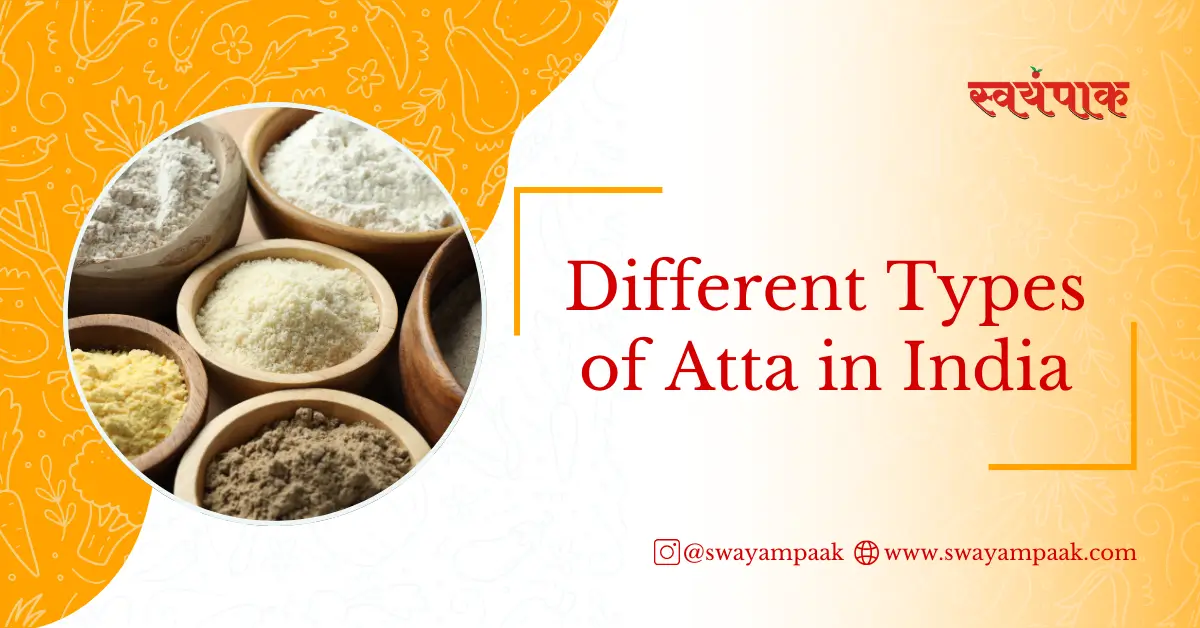
Atta, or whole wheat flour, is a kitchen essential in India, but it’s far from being a one-size-fits-all ingredient. In fact, there are over 25 different types of flour used across the country, each made from a variety of grains, pulses, and seeds, each offering its own unique qualities and uses in cooking.
While wheat atta is the go-to flour for most, rice flour, besan (gram flour), and millet flour have their own special place in different regional diets.
According to the Indian Grain Association, India produces around 80 million tonnes of wheat annually, with a large chunk of it going into atta production. Plus, there’s been a notable shift in recent years, with demand for gluten-free and organic flours growing by 15-20%.
In this post, we’ll dive into the different types of atta, their health benefits, and how each flour plays a role in shaping the rich, diverse food culture that defines India.
What is Atta in India?
Atta in Hindi means flour, and it is most commonly used for whole wheat flour (gehu ka atta), which is the basic ingredient for rotis, parathas, and puris.
Traditional atta differs from maida (refined flour) in that it is made by grinding the wheat kernels along with the bran and germ, thus making it more nutritious and fibre-rich.
Nevertheless, Indians refer to “atta” as a general term for any grain flour – rice atta, besan, jowar atta, or even flours like singhare ka atta.
The versatility in the word “atta” reflects the diversity in the culinary traditions of the country, where different regions use different grains depending on their climate, culture, and availability.
- Different Types of Atta for Daily Rotis
- Different Flours Used in India Beyond Wheat
- Vrat and Gluten-Free Atta Types
- Which Atta is Best for You? (Use-Case Table)
- Nutritional Comparison of Different Types of Atta
- Storage Tips and Shelf Life Guide for Attas
- Professional Storage Tips for Atta
- Where to buy the different types of atta?
- Dough-Making Tips and Techniques
- Flour Mixing Ratios and Blending Guide
- Taste Profiles and Texture Guide
- Regional Preferences Across India
- Important Notes on Nutrition and Usage
- Glycaemic Index Comparison
- Common Mistakes to Avoid When Using Different Flours
- Substitution Guide for Common Recipes
- Gluten-Free Substitution and Binding Guide
Different Types of Atta for Daily Rotis
Roti, Dosa, Naan, Tandoor and other types of bread in India are made from different types of atta or flour. Depending on the local culture, all there flours have various dishes made form the. Let’s see what each type of flour offers.
Whole Wheat Atta (Gehu Ka Atta)
This is the most common flour in Indian households, made by grinding whole wheat grains. The flour results in soft and pliable rotis and is a rich source of fibre, B vitamins, and minerals. Regular whole wheat flour can be used for anything from chapatis to parathas, making it the most popular choice for daily meals.
Best for: Everyday rotis, parathas, puris, and basic Indian breads.
Chakki Atta
Chakki atta is a flour that is ground with traditional stone mills (chakki), thus preserving more nutrients, and the flour has a coarser texture compared to roller mill flour. As the grinding is done slowly, no heat is generated, which ensures the wheat germ remains intact, giving the rotis a slightly nutty flavour.
Best for: People who want the traditional taste and the highest level of nutrition in their daily rotis.
Sharbati Atta
This flour is obtained from the fine wheat variety called Sharbati, which is mainly grown in Madhya Pradesh. It makes the dough yield very soft and sweet rotis. The gluten content of Sharbati wheat is lower than that of normal wheat, thus making the dough more manageable.
Best for: Soft rotis and puris; those who find regular atta too heavy will prefer this one.
Khapli Atta (Emmer)
Khapli or Emmer wheat is an ancient variety of wheat with a lower glycaemic index than regular wheat. It can be easily digested and hence is preferred by people with wheat intolerance, since it contains gluten, albeit less than regular wheat.
Khapli rotis have a different taste and are denser.
Best suited for: Health-conscious persons, diabetics, and persons searching for an ancient grain substitute.
Multigrain Atta
The combination usually comprises wheat and other grains such as oats, soya, ragi, and barley, among others. This combination enhances protein and mineral levels while imparting a robust flavour to rotis. Each brand varies in its combination; therefore, read the constituents depending on your interests.
Best suited for: Increasing nutrition intake, weight reduction, and providing diversity in food.
Different Flours Used in India Beyond Wheat
India has a great diversity of flours besides wheat, and all these have their own texture, flavour, and nutritional contribution. These flours cater to regional dishes, dietary needs, and specific forms of cooking.
Maida / Refined Wheat Flour
Maida is refined wheat flour from which the bran and germ have been eliminated, leaving behind a powdery white product. It gives light, airy breads like naan, kulcha, and bhaturas, but it lacks the fibre and nutrients of whole wheat atta. It is also used to make cakes, biscuits, and most fried snacks.
Best for: Naan, bhaturas, samosas, pastries, and baked goods.
Note: Lower nutritional value; use sparingly.
Sooji / Rava (Semolina)
Sooji or rava is coarsely ground durum wheat with a granular texture. Sooji forms the base of upma, halwa, rava dosa, and a range of sweet and salty preparations. It can add crunch to fried snacks or serve as a coating.
Best for: Upma, halwa, rava idli, rava dosa, and various other breakfast items.
Contains gluten.
Rice Flour – Chawal Ka Atta
Ground from raw or parboiled rice, rice flour is a gluten-free staple across South and East India. It is used for dosas, idlis, especially when fermented, rice rotis, modaks, and many snacks like murukku and chakli. The texture tends to be lighter and more delicate than wheat flours.
Best for: Dosas, idlis, rice rotis, and gluten-free cooking.
Besan (Gram Flour / Chickpea Flour)
Besan, a powder made from ground chickpeas, is high in protein and a common ingredient throughout India. From forming the batter or base in various snacks like pakoras, kadhi, chilla (savoury pancakes), and dhokla to sweets such as besan ladoo, it also works as a binding agent in many recipes.
Best for: Pakoras, kadhi, dhokla, chilla, and high-protein snacks.
Gluten-free, high in protein.
Vrat and Gluten-Free Atta Types
Fasting (vrat or upvas) is customary at Hindu festivals and religious ceremonies. Wheat and other grains are avoided during these times, and people instead use fasting-approved flours. These many forms of atta used for fasting in India are naturally gluten-free and created with “pure” ingredients for vrat.
Singhare Ka Atta (Water Chestnut Flour)
This is a light and slightly sweet flour made from dried water chestnuts. It is also cooling. It’s used to create puris, parathas, halwa, and pakoras during Navratri and other fasting occasions. Singhare ka atta is easily digestible and considered sattvic.
Ideal for: vrat puris, parathas, pakoras, and halwa.
Kuttu Ka Atta (Buckwheat Flour)
Despite its name, buckwheat is a gluten-free seed, not wheat. Kuttu ka atta fills puris, parathas, and pakoras during fasting. It has a unique earthy flavour and is high in protein and fibre.
Ideal for: Vrat puris, kuttu ki pakoras, and pancakes.
Rajgira Atta (Amaranth Flour)
Rajgira, also known as amaranth, is a high-protein, gluten-free ancient grain that has become a fasting staple. During vrat, the flour makes a soft, slightly sticky dough that is used to make parathas, chikkis (bars), and ladoos.
Ideal for: Vrat parathas, ladoos, and high-protein fasting meals.
Sama Atta (Barnyard Millet Flour)
Also known as Barnyard Millet Flour, is a type of millet traditionally consumed during fasting. During vrat, the flour is used to produce light rotis or to cook rice-like grains (pulao). The flavour is light and easy to digest.
Ideal for: Vrat rotis, pulao, and khichdi.
Sabudana flour (Tapioca or Sago Flour)
While sabudana pearls are more popular, the flour version is used to make papads, thalipeeth, and vadas during fasting. It’s pure starch, which provides rapid energy but little nourishment beyond carbohydrates.
Ideal for: Vrat papads, thalipeeth, and vadas.
All the given vrat flours are gluten-free and considered appropriate for religious fasting practices across India.
Which Atta is Best for You? (Use-Case Table)
| Atta Type | Grain / Source | Gluten-Free? | Best For | Health Notes |
|---|---|---|---|---|
| Whole Wheat Atta | Wheat | No | Daily rotis, parathas, puris | Balanced nutrition, high fibre |
| Chakki Atta | Stone-ground wheat | No | Traditional rotis | Maximum nutrient retention |
| Sharbati Atta | Sharbati wheat | No | Soft rotis, puris | Lower gluten, sweet taste |
| Khapli / Emmer Atta | Ancient wheat | No | Health-conscious rotis | Lower GI, easier digestion |
| Multigrain Atta | Wheat + other grains | No | Nutritious daily rotis | High fibre and protein |
| Maida | Refined wheat | No | Naan, bhaturas, baked goods | Low nutrition, use sparingly |
| Sooji / Rava | Durum wheat | No | Upma, halwa, rava dosa | Quick energy, moderate nutrition |
| Rice Flour | Rice | Yes | Dosas, idlis, rice rotis | Good for gluten sensitivity |
| Besan | Chickpeas | Yes | Pakoras, kadhi, chilla | High protein, suits diabetics |
| Sattu | Roasted pulses/grains | Yes | Drinks, litti, parathas | Energy booster, cooling |
| Soya Flour | Soybeans | Yes | Protein-rich blends | Very high protein |
| Jowar Atta | Sorghum millet | Yes | Bhakris, rotis | Lower GI, good for diabetics |
| Bajra Atta | Pearl millet | Yes | Winter rotis | High iron, warming |
| Ragi Atta | Finger millet | Yes | Mudde, dosas, porridge | Excellent calcium source, kids |
| Multi-Millet Atta | Various millets | Yes | Nutritious rotis | Comprehensive ancient grains nutrition |
| Singhare Ka Atta | Water chestnuts | Yes | Vrat puris, pakoras | Cooling, easy digestion |
| Kuttu Ka Atta | Buckwheat | Yes | Vrat puris, parathas | High protein, fasting |
| Rajgira Atta | Amaranth | Yes | Vrat parathas, ladoos | High protein, fasting |
| Sama Atta | Barnyard millet | Yes | Vrat rotis, pulao | Light, fasting |
| Sabudana Flour | Tapioca | Yes | Vrat papads, vadas | Quick energy, fasting |
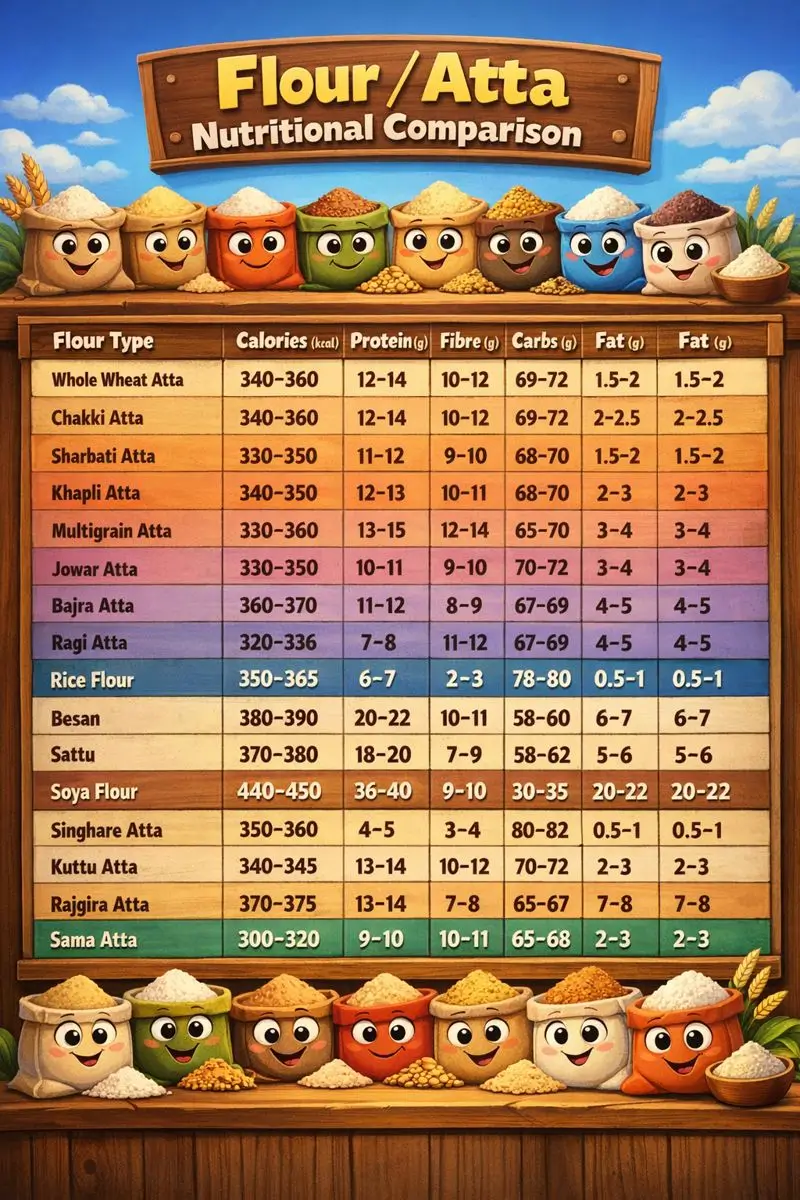
Nutritional Comparison of Different Types of Atta
| Atta Type | Nutrition (per 100 g) | Key Nutrients / Highlights |
|---|---|---|
| Whole Wheat Atta | 340–360 kcal Protein: 12–14 g Fibre: 10–12 g Carbs: 69–72 g Fat: 1.5–2 g | B vitamins, iron, magnesium |
| Maida | 350–365 kcal Protein: 10–11 g Fibre: 2–3 g Carbs: 75–77 g Fat: 1–1.5 g | Mostly refined carbohydrates |
| Jowar | 330–350 kcal Protein: 10–11 g Fibre: 9–10 g Carbs: 70–72 g Fat: 3–4 g | Iron, phosphorus, potassium |
| Bajra | 360–370 kcal Protein: 11–12 g Fibre: 8–9 g Carbs: 67–69 g Fat: 4–5 g | Iron, magnesium, zinc |
| Ragi | 320–336 kcal Protein: 7–8 g Fibre: 11–12 g Carbs: 72–74 g Fat: 1–2 g | Very high calcium (≈344 mg), iron |
| Rice Flour | 350–365 kcal Protein: 6–7 g Fibre: 2–3 g Carbs: 78–80 g Fat: 0.5–1 g | Low in most nutrients |
| Besan | 380–390 kcal Protein: 20–22 g Fibre: 10–11 g Carbs: 58–60 g Fat: 6–7 g | High protein, folate, iron |
| Sattu | 370–380 kcal Protein: 18–20 g Fibre: 7–9 g Carbs: 58–62 g Fat: 5–6 g | High protein, iron, calcium |
| Soya Flour | 440–450 kcal Protein: 36–40 g Fibre: 9–10 g Carbs: 30–35 g Fat: 20–22 g | Highest protein, isoflavones |
| Khapli / Emmer | 340–350 kcal Protein: 12–13 g Fibre: 10–11 g Carbs: 68–70 g Fat: 2–3 g | Better mineral profile than wheat |
| Kuttu (Buckwheat) | 340–345 kcal Protein: 13–14 g Fibre: 10–12 g Carbs: 70–72 g Fat: 2–3 g | Complete protein, rutin |
| Rajgira (Amaranth) | 370–375 kcal Protein: 13–14 g Fibre: 7–8 g Carbs: 65–67 g Fat: 7–8 g | Lysine, calcium, iron |
| Singhare Ka Atta | 350–360 kcal Protein: 4–5 g Fibre: 3–4 g Carbs: 80–82 g Fat: 0.5–1 g | Potassium, low protein |
| Sooji / Rava | 350–360 kcal Protein: 12–13 g Fibre: 3–4 g Carbs: 72–74 g Fat: 1–2 g | Quick energy, moderate nutrition |
Storage Tips and Shelf Life Guide for Attas
Whole Wheat Atta
- Storage: Keep in an airtight container in a cool, dry area.
- Shelf Life: At room temperature, it lasts for 2-3 months; in the fridge, it can last 6-8 months.
- Freezing: You can freeze it for up to one year.
- Check for Freshness: Before using older stock, always check for any sour or rotting odour.
Multigrain and Khapli Atta
- Storage: These are more prone to rancidity due to the higher oil content from the bran and germ, so it’s best to store them in the fridge or freezer.
- Shelf Life: They last for 1-2 months at room temperature, but up to 4-6 months when refrigerated.
- Optimal Usage: For the best flavour, try to use within three months of purchase.
Millet Flour (Jowar, Bajra, and Ragi)
- Storage: Always store in sealed containers, away from moisture.
- Shelf Life: 2-3 months at room temperature; up to 6 months when refrigerated.
- Bajra Atta: Because of its higher oil content, Bajra atta degrades faster. Refrigerate if you’re not using it quickly.
- Tip: If you don’t use these flours consistently, consider buying smaller quantities.
Besan & Sattu
- Storage: Both flours are highly stable at room temperature, but should still be kept in sealed containers to maintain freshness.
- Shelf Life: They last 4-6 months in sealed containers, with Besan lasting up to a year if stored properly.
- Tip: Keep them away from moisture to prevent lumping.
Rice Flour and Maida
- Storage: These flours have the longest shelf life of all.
- Shelf Life: 6-12 months at room temperature in sealed containers.
- Pest Resistance: They are less prone to pest infestations compared to whole-grain flours.
Vrat Flours (Singhare, Kuttu, and Rajgira)
- Storage: Buy in minimal quantities as these are used seasonally.
- Shelf Life: They last for about 3-4 months in sealed containers.
- Storage Tip: Keep them in a cool, dry location. Refrigeration can prolong their shelf life.
- Pre-season Check: Check the flours before the fasting season begins, as some could have been stored for several months.
Professional Storage Tips for Atta
- Insect Prevention: To deter insects, add a few dried neem or bay leaves to your storage containers.
- Labelling: Always label containers with the purchase or grinding date to track freshness.
- Refrigerated Atta: If stored in the fridge, allow the flour to come to room temperature before use. This helps improve dough consistency.
- Long-term Storage: Consider using vacuum-sealed bags for longer storage, especially if you’re planning to keep large quantities.
- Grind Fresh: For the best taste and nutrients, try grinding whole grains at home when possible.
Where to buy the different types of atta?
| Type of Atta | Where to Buy | Price Range | Popular Brands |
|---|---|---|---|
| Regular Whole Wheat Atta | Local kirana stores, supermarkets, online | ₹35-60 per kg | Aashirvaad, Pillsbury, Annapurna, Nature Fresh |
| Chakki and Sharbati Atta | Supermarkets, online platforms, speciality retailers | ₹50-80 per kg (Chakki); ₹60-100 per kg (Sharbati) | Aashirvaad Sharbati, Patanjali Chakki Atta, Shakti Bhog |
| Khapli (Emmer) Atta | Health food stores, organic shops, Amazon, BigBasket | ₹120-200 per kg | Organic India, 24 Mantra, Conscious Food, local organic companies |
| Multigrain Atta | Supermarkets, health stores, online | ₹60-120 per kg | Aashirvaad Multigrain, Nature Land, Fortune |
| Millet Flour (Jowar, Bajra, and Ragi) | Local flour mills, supermarkets, health stores, online | ₹50-80 per kg (single millet); ₹80-150 per kg (multi-millet mix) | Organic Tattva, Jiwa, Conscious Food, So Good, local mills |
| Besan (Chickpea Flour) | Widely available | ₹70-120 per kg | Everest, MDH, local mills |
| Maida & Sooji | Readily available in grocery stores | ₹30-50 per kg (Maida); ₹40-60 per kg (Sooji) | Pillsbury, Annapurna, Shakti Bhog |
| Sattu | North Indian stores, speciality shops, online | ₹80-150 per kg | Patanjali, indigenous brands from Bihar/UP |
| Vrat Flours | Available seasonally (before Navratri), year-round in Indian grocery stores and online | ₹100-200 per kg | Gits, Shakti Bhog, 24 Mantra |
Dough-Making Tips and Techniques
Water Ratios for Different Attas
Whole Wheat Atta
- Water Ratio: 1 cup atta to approximately ½–⅔ cup water
- Technique: Add water gradually and knead for 5–7 minutes until the dough is smooth and elastic
- Resting Time: 15–20 minutes for softer rotis
- Tip: Using slightly warm water makes the dough more pliable
Multigrain Atta
- Water Ratio: 1 cup atta to ⅔–¾ cup water (absorbs more water)
- Technique: Knead thoroughly for 7–10 minutes; the dough will feel slightly denser
- Resting Time: 20–30 minutes is essential
- Tip: Add 1 teaspoon of oil for softer rotis
Jowar Atta
- Water Ratio: 1 cup atta to ¾–1 cup hot or warm water
- Technique: Mix with hot water, knead while still warm, and use immediately
- Resting Time: Use fresh; the dough does not store well
- Tip: Pat bhakris by hand rather than rolling for best results
Bajra Atta
- Water Ratio: 1 cup atta to ¾–1 cup warm water
- Technique: Use warm water and knead into a slightly sticky dough
- Resting Time: Minimal; use within 30 minutes
- Tip: Keep your hands moist while shaping, as the dough cracks easily
Ragi Atta
- Water Ratio: 1 cup atta to 1–1¼ cups hot water
- Technique: Pour hot water over the flour, mix with a spoon first, then knead once cool enough
- Resting Time: 15–20 minutes
- Tip: The dough is sticky; dust the rolling surface generously
Rice Flour
- Water Ratio: 1 cup flour to ¾ cup boiling water (for rice rotis)
- Technique: Pour boiling water over the flour, mix, add cold water if required, and knead gently
- Resting Time: 10 minutes
- Tip: Very delicate; roll between plastic sheets or banana leaves
Besan
- Water Ratio: 1 cup besan to ⅓–½ cup water (for chilla batter)
- Technique: Whisk well to remove lumps and rest for 10 minutes
- Tip: Keep batter thick for pakoras and a thinner, pourable consistency for chillas
Vrat Flours (Kuttu, Singhare)
- Water Ratio: 1 cup flour to ½–⅔ cup warm water
- Technique: Knead gently; the dough is more delicate than wheat
- Resting Time: 10–15 minutes
- Tip: Adding boiled, mashed potatoes helps bind the dough better
Universal Kneading Tips
- Always add water gradually. You can add more, but you cannot remove excess
- Knead wheat-based dough in one direction for even gluten development
- Lightly oil your hands if the dough feels sticky
- Cover the resting dough with a damp cloth to prevent drying
- For softer rotis, add 1 tablespoon of yoghurt or milk to the wheat dough
Flour Mixing Ratios and Blending Guide
Creating Custom Atta Blends
For Enhanced Nutrition (Daily Use)
- 70% whole wheat + 20% jowar + 10% ragi
- 60% wheat + 20% bajra + 10% soya + 10% oats
- 50% wheat + 30% multi-millet + 20% chickpea flour
For Diabetes Management
- 50% wheat + 30% jowar + 20% barley
- 40% wheat + 30% bajra + 30% chickpea flour
- 60% jowar + 20% ragi + 20% bajra (wheat-free option)
For Weight Loss
- 50% wheat + 30% jowar + 20% ragi (high fibre)
- 40% wheat + 40% bajra + 20% oats
- Higher millet content helps reduce calorie density
For Children (Calcium & Protein Boost)
- 70% wheat + 20% ragi + 10% soya flour
- 60% wheat + 25% ragi + 15% sattu
For Beginners to Millets
- 80% wheat + 20% single millet (start with jowar or ragi)
- Gradually increase millet proportions over a few weeks
- Avoid exceeding 50% millet initially, as texture takes time to adjust
For Gluten-Free Blends
- 40% rice flour + 30% jowar + 20% ragi + 10% tapioca starch (for binding)
- 50% jowar + 25% bajra + 25% chickpea flour
- 60% rice + 20% ragi + 20% amaranth
Tips for Successful Blending
- Mix dry flours thoroughly before adding water
- Store blends in airtight containers and use within 3–4 weeks
- Label containers with the blend ratio and date
- Adjust water quantities—millet blends need more hydration
- Expect denser, rustic rotis with higher millet content
- Add 1–2 teaspoons of oil for better texture in non-wheat doughs
Taste Profiles and Texture Guide
What to Expect from Different Attas
Whole Wheat Atta
- Taste: Mildly sweet, neutral, wheaty
- Texture: Soft and pliable when fresh
- Roti Appearance: Light golden spots; puffs easily
- Mouthfeel: Smooth and easy to chew
Sharbati Atta
- Taste: Noticeably sweeter than regular wheat
- Texture: Extremely soft, almost melt-in-the-mouth
- Roti Appearance: Lighter colour, delicate puff
- Mouthfeel: Tender and less chewy
Khapli (Emmer) Atta
- Taste: Nutty and earthy
- Texture: Denser, heartier bite
- Roti Appearance: Darker golden, rustic
- Mouthfeel: Grainy and substantial
Multigrain Atta
- Taste: Complex, nutty, sometimes slightly bitter
- Texture: Dense with visible grain particles
- Roti Appearance: Darker, speckled, uneven puffing
- Mouthfeel: Filling and slightly coarse
Jowar Atta
- Taste: Mild and earthy
- Texture: Compact and dense
- Roti Appearance: Greyish-brown, thick, no puffing
- Mouthfeel: Heavy and crumbly if overcooked
Bajra Atta
- Taste: Strong, earthy, slightly bitter-nutty
- Texture: Very dense and sturdy
- Roti Appearance: Dark grey-brown, rustic
- Mouthfeel: Hearty and warming
Ragi Atta
- Taste: Earthy, malty; acquired taste for some
- Texture: Dense, slightly gritty
- Roti Appearance: Dark brown to reddish-brown
- Mouthfeel: Substantial and distinctive
Maida
- Taste: Very mild, almost flavourless
- Texture: Extremely soft and fluffy
- Appearance: Pale, airy breads
- Mouthfeel: Pillowy and light
Rice Flour
- Taste: Mild and slightly sweet
- Texture: Delicate and brittle
- Roti Appearance: Pale, thin, no puffing
- Mouthfeel: Light and non-chewy
Besan
- Taste: Nutty, chickpea flavour, slightly bitter
- Texture: Dense, sometimes crumbly
- Appearance: Golden yellow when cooked
- Mouthfeel: Rich and filling
Kuttu (Buckwheat) Atta
- Taste: Strong, earthy, distinctive
- Texture: Dense and grainy
- Roti Appearance: Dark grey-brown
- Mouthfeel: Hearty with a lingering aftertaste
Singhare Atta
- Taste: Mildly sweet and cooling
- Texture: Light and delicate
- Roti Appearance: Off-white to light brown
- Mouthfeel: Soft and easy to digest
Texture Comparison Summary

Regional Preferences Across India
Which States Prefer Which Atta
North India (Punjab, Haryana, UP, Delhi)
- Primary: Whole wheat atta
- Specialities: Sharbati wheat (MP), sattu (Bihar/Eastern UP)
- Reason: Wheat cultivation belt and roti-centric cuisine
- Popular Dishes: Makki di roti during winter
Western India (Rajasthan, Gujarat, Maharashtra)
- Primary: Wheat with significant millet use
- Specialities: Bajra (Rajasthan, Gujarat), jowar bhakri (Maharashtra)
- Reason: Arid climate suited to millet farming
- Popular Dishes: Bajra roti, jowar bhakri, nachni bhakri
South India (Karnataka, Andhra Pradesh, Tamil Nadu, Kerala)
- Primary: Rice flour and ragi
- Specialities: Ragi mudde (Karnataka), rice across all states
- Reason: Rice cultivation and rice-based meals
- Popular Dishes: Dosa, idli, akki roti
Eastern India (West Bengal, Odisha, Assam, North-East)
- Primary: Rice flour, with growing wheat use
- Specialities: Rice-based flours
- Reason: Rice cultivation and fish-rice food culture
- Popular Dishes: Luchi, rice preparations
Central India (Madhya Pradesh, Chhattisgarh)
- Primary: Wheat atta (Sharbati variety)
- Specialities: Wheat-millet blends, kodo-kutki
- Reason: Wheat farming alongside tribal millet traditions
- Popular Dishes: Bafla, wheat rotis, millet foods
Tribal and Rural Regions
- Primary: Traditional millets
- Specialities: Sama, kodo, kutki, foxtail millet
- Reason: Drought resistance and traditional knowledge
- Status: Experiencing revival as “ancient grains”
Urban India (Pan-India)
- Primary: Whole wheat atta
- Trend: Growing demand for multigrain and millet attas
- Reason: Health awareness and lifestyle changes
- Popular Choices: Packaged multi-millet and organic blends
Important Notes on Nutrition and Usage
- Nutritional values are approximate and vary depending on the brand, grain variety, and processing method.
- Ragi stands out for its exceptionally high calcium content, offering nearly 10 times more calcium than wheat.
- Besan and soya flour contain significantly more protein than most grain-based flours.
- Millets generally provide higher mineral content compared to wheat.
- Maida and rice flour are low in fibre and minerals, making them less nutritious.
- Whole-grain flours retain more nutrients than their refined or processed counterparts.
Glycaemic Index Comparison
(Lower GI values are better for blood sugar control)
Low GI Foods (Below 55)
- Bajra (≈54)
- Jowar (some varieties ≈55)
- Chickpea flour / Besan (≈35)
Medium GI Foods (56–69)
- Whole wheat (≈69)
- Ragi (varies between 66–80)
- Khapli / Emmer wheat (lower GI than regular wheat)
High GI Foods (Above 70)
- Maida (85+)
- Rice flour (high GI)
Common Mistakes to Avoid When Using Different Flours
Mistake 1: Adding Too Much Water at Once
- Problem: Sticky, unmanageable dough
- Solution: Add water gradually, tablespoon by tablespoon
- Most Affected Flours: Ragi and bajra, which absorb water slowly
Mistake 2: Skipping the Dough Resting Time
- Problem: Tough, chewy rotis that don’t roll well
- Solution: Rest the wheat dough for 15–20 minutes and the multigrain dough for 20–30 minutes
- Exception: Jowar and bajra should be used immediately after kneading
Mistake 3: Rolling Millet Rotis Too Thin
- Problem: Rotis crack and break apart
- Solution: Keep jowar, bajra, and ragi bhakris thicker (2–3 mm)
- Tip: Pat by hand instead of using a rolling pin
Mistake 4: Using Cold Water for Millet Dough
- Problem: Dough remains crumbly and does not bind
- Solution: Always use warm to hot water
- Why: Heat helps gluten-free flours bind better
Mistake 5: Storing Millet or Multigrain Atta at Room Temperature for Too Long
- Problem: Flour turns rancid due to higher oil content
- Solution: Refrigerate if not used within one month
- Warning Signs: Bitterness or unpleasant odour
Mistake 6: Expecting Millet Rotis to Puff Like Wheat
- Problem: Overcooking and frustration
- Reality: Jowar, bajra, and ragi bhakris do not puff naturally
- Cooking Tip: Cook until light brown spots appear and flip once
Mistake 7: Using Excess Oil to Compensate
- Problem: Greasy, heavy rotis that reduce health benefits
- Solution: Add 1 teaspoon oil to the entire dough
- Better Approach: Slightly increase water content instead
Mistake 8: Mixing Vrat and Regular Flours
- Problem: Breaks fasting rules and religious guidelines
- Solution: Use separate utensils, boards, and storage containers
- Tip: Clean the workspace thoroughly to avoid cross-contamination
Mistake 9: Not Sieving Besan or Sattu
- Problem: Lumpy batter for pakoras or chillas
- Solution: Always sieve before adding water
- Extra Step: Whisk vigorously to remove any remaining lumps
Mistake 10: Cooking Delicate Flours on High Heat
- Problem: Rice rotis burn; singhare puris darken too quickly
- Solution: Use medium heat and cook slowly
- Observation: These flours cook faster than wheat
Mistake 11: Buying Large Quantities of Speciality Flours
- Problem: Flour spoils before use
- Solution: Buy smaller quantities (500 g–1 kg), especially millet and vrat flours
- Planning Tip: Purchase closer to intended use
Mistake 12: Using the Same Kneading Time for All Flours
- Problem: Sticky millet dough or tough wheat dough
- Solution: Knead wheat for 5–7 minutes; gently mix millet dough for 2–3 minutes
- Reminder: Millets contain no gluten and need gentler handling
Mistake 13: Switching Fully to Millet Flour as a Beginner
- Problem: Texture issues, strong taste, family resistance
- Solution: Start with 70–80% wheat and 20–30% millet
- Transition: Increase millet content gradually
Mistake 14: Reheating Millet Rotis in the Microwave
- Problem: Rotis become hard and inedible
- Solution: Reheat on a tawa with a few drops of water and cover
- Best Practice: Consume millet rotis fresh
Mistake 15: Ignoring Expiry Dates on Packaged Flour
- Problem: Stale taste, insect infestation, nutrient loss
- Solution: Check manufacturing dates and use within 3–4 months
- Storage Reminder: Proper storage is essential even for fresh flour
Substitution Guide for Common Recipes
Alternatives for Whole Wheat Atta
- Replace with Sharbati or multigrain atta (1:1 ratio)
- For gluten-free cooking: 70% jowar + 30% rice flour
- Quick Fix: Maida works but lacks nutrition (not recommended for regular use)
When You Don’t Have Maida
- Use whole wheat atta (healthier but denser)
- For baking: Use half whole wheat and half refined wheat flour
- For binding: Use small amounts of cornflour or rice flour
When You Don’t Have Besan
- Substitute with yellow lentil flour
- For pakoras: Use half rice flour and half cornflour (flavour differs)
- Note: Besan has no perfect replacement
When You Don’t Have Rice Flour
- Use cornflour for coating and crispiness
- For dosas: Grind soaked rice to make fresh flour
- For gluten-free rotis: Use jowar or bajra with a binding agent
When You Don’t Have Jowar or Bajra
- Substitute with each other in equal quantities
- Ragi is an option, though taste and texture vary
- For non-gluten needs: 70% wheat + 30% oats
When You Don’t Have Ragi
- Replace with wheat plus sesame seed powder (for calcium)
- Alternatively: Bajra or jowar (with lower calcium benefit)
- For children: Fortified wheat atta
When You Don’t Have Sooji or Rava
- For upma: Use broken rice
- For halwa: Wheat flour gives a different texture
- For idlis: Poha can be used in combination
When You Don’t Have Vrat Flour
- Kuttu ↔ Rajgira (similar binding, different taste)
- Singhare ↔ Sama rice flour (lighter option)
- Sabudana ↔ Sama rice (for fasting only)
- Important: Never replace vrat flours with regular grains
When You Don’t Have Multigrain Atta
- Make your own: 60% wheat + 20% jowar + 10% ragi + 10% oats
- Or use 70% wheat and 30% millet
- Plain wheat works, but it reduces the variety benefits
When a Recipe Mentions “Atta” Without Specification
- Default to whole wheat atta
- Check the regional context. South Indian recipes may mean rice flour
Gluten-Free Substitution and Binding Guide
Gluten-Free Flour Blends
- 40% rice flour + 30% jowar + 20% tapioca starch + 10% potato starch
- Add 1 teaspoon xanthan gum per cup of flour
- For rotis: 60% jowar + 40% rice flour works well
Binding Agent Alternatives
- 1 mashed boiled potato per cup of flour
- 1–2 tablespoons psyllium husk powder
- 2 tablespoons ground flaxseed mixed with 3 tablespoons water
Professional Substitution Tips
- Water quantities often need adjustment
- Millet-to-millet swaps work best
- Wheat-to-millet substitutions require recipe changes
- Experiment with small batches
- Set realistic expectations; taste and texture will differ
Key Takeaways
- For managing diabetes: Opt for low-GI flours such as jowar, bajra, ragi, or khapli atta, which help keep blood sugar levels steadier.
- For weight management: Whole wheat, multigrain, and millet attas are rich in fibre and help you feel full for longer.
- For children: Ragi atta is an excellent source of calcium, supporting strong bones and growth, while whole wheat and multigrain flours are also nutritious choices.
- For gluten sensitivity: Rice flour, millet flours, besan, and vrat flours are naturally gluten-free and easy to include in everyday cooking.
- For fasting and religious observances: Singhare, kuttu, rajgira, sama, and sabudana flours are commonly used and well-suited to vrat meals.
With such a wide variety of atta and flours available across India, choosing the right one can make everyday meals both healthier and more enjoyable. From cooking soft rotis for daily meals to experimenting with ancient grains for better health or preparing special vrat dishes, there truly is a flour for every need in India’s rich and diverse food culture.