
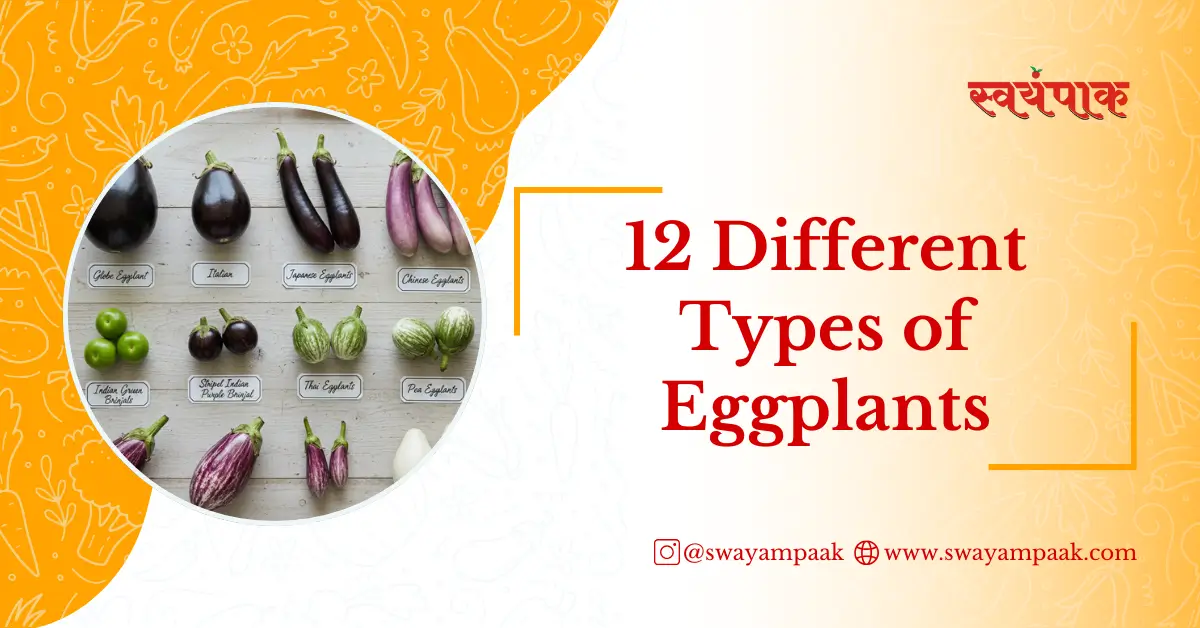
While most shoppers only recognise the large, pear-shaped Globe variety, there are actually over 12 different types of eggplant used in global cuisines.
From the slender, sweet Japanese varieties to the crunchy, bitter Thai types, the ‘best’ eggplant depends entirely on your cooking method.
Quick Summary: If you are making a hearty roast, choose a Globe or Italian variety. For stir-fries that hold their shape, go with Japanese or Chinese. For traditional Indian stuffing recipes, the small, tender Indian Brinjal is the gold standard. In this 2026 guide, we break down the texture, flavour profile, and best recipes for every variety.
- The Global Guide to 12 Eggplant Varieties
- 1. The Western Classics (High-Volume & Meaty)
- 2. The Asian Slenders (Thin-Skinned & Seedless)
- 3. The Indian Favourites (The Heart of Brinjal)
- 4. The Exotic & Small Bites (Flavour Bombs)
- 5. The Gourmet & Heirloom Gems
- Different Types of Eggplant Comparison Table
- To Peel or Not to Peel? A Guide by Variety
- The "Bitter Factor": Which Varieties Need Salting?
- Market Selection & Storage
- FAQs
- Conclusion: Finding Your Perfect Brinjal
The Global Guide to 12 Eggplant Varieties
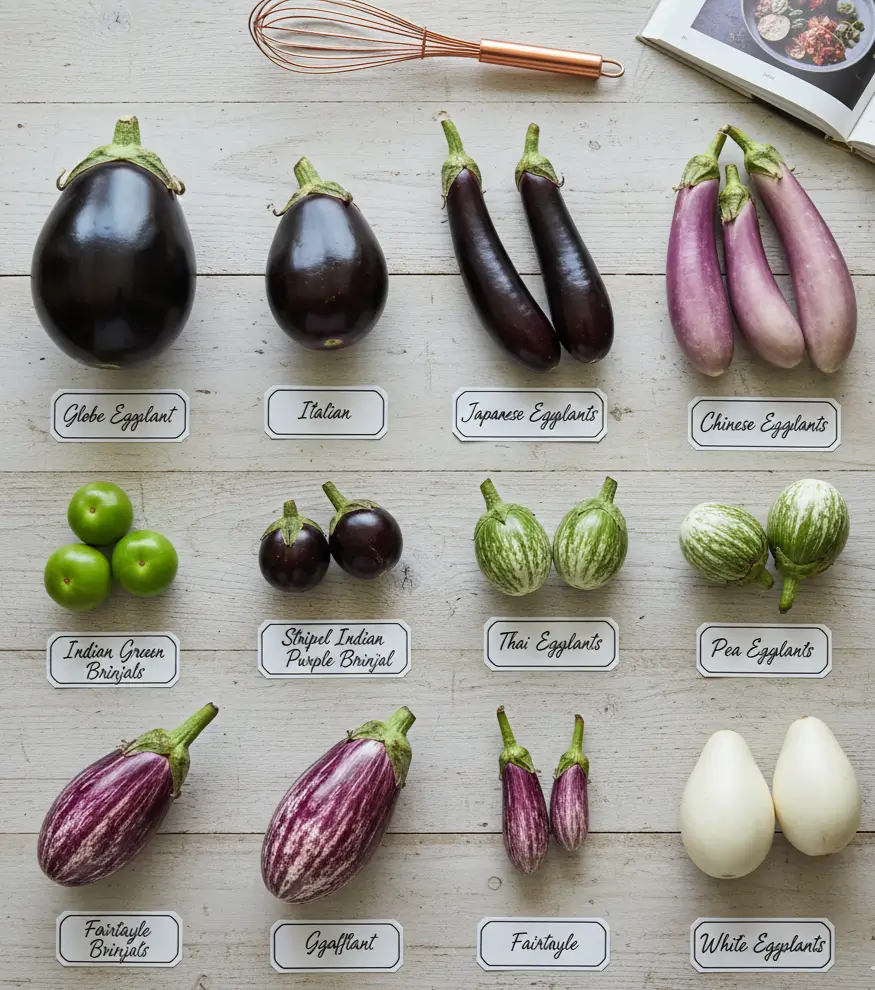
To the casual shopper, a brinjal vs eggplant is a very common confusion. But it’s just a different name. To a chef, choosing the right variety is the difference between a creamy curry and a bitter, mushy mess. Botanically known as Solanum melongena, these 12 different types of eggplants represent the best of global agriculture
1. The Western Classics (High-Volume & Meaty)
Globe Eggplant (American)
The most common variety found in Western supermarkets. They are large, pear-shaped, and have a deep purple, almost black skin.
- Texture: Spongy and absorbent.
- Best For: Slicing into “steaks,” breading for Eggplant Parmesan, or cubing for hearty stews like Ratatouille.
- 2026 Tip: Because of their size, they contain more alkaloids. Always salt and “sweat” these to remove bitterness.
Italian Eggplant
Similar to the Globe but smaller and more oval. The skin is thinner, and the flesh is significantly sweeter.
- Texture: Tender and creamy when roasted.
- Best For: Making Baba Ganoush or Sicilian Caponata. It roasts faster than the Globe variety.
2. The Asian Slenders (Thin-Skinned & Seedless)
Japanese Eggplant
Long, slender, and deep purple with a dark-colored cap.
- Texture: Firm but melts in your mouth when cooked.
- Best For: Grilling whole or Nasu Dengaku (Miso-glazed eggplant). It has virtually no seeds.
Chinese Eggplant
Identifiable by its lighter, lavender-purple skin and green cap. It is even longer and thinner than the Japanese type.
- Texture: Very delicate.
- Best For: Stir-fries. It cooks incredibly fast and holds its shape without becoming greasy.
3. The Indian Favourites (The Heart of Brinjal)
Small Purple Indian Brinjal
The star of Indian kitchens. These are small, egg-shaped, and dark purple.
- Texture: Creamy and highly absorbent of spices.
- Best For: Bharli Vangi or Ennai Kathirikai (Stuffed Brinjal). The small size allows for even cooking when stuffed whole.
Green Brinjal (Round or Long)
Popular in South India and Maharashtra, these are often milder and less bitter than purple types.
- Texture: Slightly firmer skin.
- Best For: Vangi Bhath (Spiced Rice) or adding to traditional Sambar.
Striped (Kateri) Brinjal
A beautiful heirloom variety with purple and white stripes, often with small thorns on the cap.
- Texture: Robust and earthy.
- Best For: Traditional village-style masalas. It stands up well to heavy tempering (tadka).
4. The Exotic & Small Bites (Flavour Bombs)
Thai Green Eggplant
Golf-ball-sized, round, and crunchy with green and white stripes.
- Texture: Crunchy (unlike the spongy Western types).
- Best For: Thai Green Curry. In Thailand, these are often added last to maintain their “pop” and crunch.
Pea Eggplant
Tiny clusters that look like green berries.
- Texture: They burst when bitten, releasing a signature bitter juice.
- Best For: Authentic Thai sauces and soups where a punch of bitterness is required to balance spice.
5. The Gourmet & Heirloom Gems
Graffiti (Sicilian) Eggplant
Named for its “splashed” purple and white stripes. It’s as beautiful as it is delicious.
- Texture: Silky and seedless.
- Best For: Sautéing or roasting. The skin is so thin it does not require peeling.
Fairytale Eggplant
Miniature, palm-sized striped eggplants.
- Texture: Extremely creamy and sweet.
- Best For: Quick pan-roasting or skewering for Kebabs. They are never bitter.
White Eggplant
The variety that gave the “eggplant” its name! They are firm, white, and shaped like large eggs.
- Texture: Denser and less watery than purple types.
- Best For: Frying. Because they are firm, they absorb less oil, making them the “crispiest” option.
Different Types of Eggplant Comparison Table
To help you decide at a glance, this table compares the 12 varieties based on their culinary behaviour. This is the ultimate “cheat sheet” for your next grocery trip.
| Variety | Skin Type | Bitterness | Seediness | Best Cooking Method |
| Globe | Thick | High | Moderate | Roasting, Baking |
| Italian | Medium | Low | Low | Dips, Grilling |
| Japanese | Thin | Very Low | None | Glazing, Sautéing |
| Chinese | Very Thin | Very Low | None | Quick Stir-fry |
| Indian Purple | Thin | Low | Low | Stuffing, Curries |
| Indian Green | Medium | Very Low | Low | Rice Dishes, Sambar |
| Striped Kateri | Medium | Moderate | Moderate | Spiced Masalas |
| Thai Green | Thick/Firm | Moderate | High | Curries (Crunchy) |
| Pea Eggplant | Firm | High | Very High | Soups, Thai Sauces |
| Graffiti | Thin | Very Low | None | Sautéing, Roasting |
| Fairytale | Very Thin | None | None | Pan-searing Whole |
| White | Thick/Firm | Low | Moderate | Deep Frying |
To Peel or Not to Peel? A Guide by Variety
One of the most common questions cooks ask is whether the skin of an eggplant should be removed. In 2026, the trend is toward reducing food waste, but sometimes the skin is simply too tough.
- Never Peel: Japanese, Chinese, Fairytale, and Graffiti eggplants. Their skins are so delicate that they practically melt when heat is applied.
- Optional (Zebra Peel): Indian Purple and Green varieties. You can peel “stripes” off to allow flavours to penetrate faster while keeping the vegetable’s shape.
- Usually, Peel: Large Globe and White eggplants. As these varieties mature, the skin becomes leathery and can have a slightly plastic-like texture after roasting.
The “Bitter Factor”: Which Varieties Need Salting?
Not every eggplant needs to be salted! Salting (or “sweating”) is used to draw out moisture and bitter alkaloids.
- High Priority (Must Salt): Globe and Pea Eggplants. Their bitterness is a defining characteristic that needs balancing.
- Medium Priority: Italian and Striped Kateri. Salt them if you are frying, as it prevents them from absorbing too much oil.
- Low Priority (No Salt Needed): Japanese, Chinese, Fairytale, and Graffiti. These varieties have been bred for sweetness and low moisture, so you can cook them straight away.
Market Selection & Storage
To ensure your 12-variety collection stays fresh, follow these modern storage rules:
How to Pick:
- The Thumbprint Test: Press the skin gently. If it bounces back, it’s fresh. If the indentation stays, it’s old and will be full of bitter seeds.
- The “Cap” Colour: A bright green stem/cap is the best indicator of a recently harvested eggplant. Avoid any with brown or dry caps.
How to Store:
- Temperature Matters: Eggplants are tropical; they hate temperatures below 10 degree celcius. Avoid the coldest part of your fridge.
- The Paper Bag Method: Store them in a cool, dark pantry or the warmest part of your fridge (the door or top shelf) inside a paper bag to manage humidity.
- Keep Away from Fruits: Do not store eggplants near bananas or apples. The ethylene gas from these fruits will cause your eggplants to rot within 48 hours.
FAQs
Which type of eggplant is the least bitter?
The Japanese, Chinese, and Fairytale varieties are the least bitter. These have been bred for sweetness and have very few seeds. Because their skin is incredibly thin, they don’t contain the high concentration of bitter alkaloids found in larger, thicker-skinned varieties like the Globe eggplant.
Can I use different types of eggplant interchangeably in recipes?
Yes, but with caution. While you can swap a Globe eggplant for an Italian one easily, substituting a Thai green eggplant for a Japanese variety will change the dish’s texture. Always consider the skin thickness and water content; thick-skinned varieties need more cooking time, while thin-skinned types cook in minutes.
Do I need to salt all types of eggplant before cooking?
No. In 2026, many modern hybrids are less bitter than heirloom varieties. You should only salt Globe (American) and Pea eggplants, or any variety that feels “spongy.” Salting draws out excess moisture, which is essential if you are deep-frying to prevent the vegetable from absorbing too much oil.
Why is my eggplant mushy after cooking?
Mushiness usually happens with high-moisture varieties like Chinese or Italian eggplants when they are overcrowded in a pan. To keep them firm, cook in small batches over high heat. If you are making a stir-fry, choose Japanese or Chinese varieties as they hold their cellular structure better than the larger Globe types.
How can I tell if an eggplant has too many seeds?
Weight and skin tension are the best indicators. Pick up the eggplant; if it feels “light” or “hollow” for its size, it is likely older and filled with large, tough seeds. Additionally, if the skin is dull rather than shiny, the vegetable is past its prime, and the seed count will be high.
Conclusion: Finding Your Perfect Brinjal
Whether you call it brinjal, eggplant, or aubergine, this vegetable is one of the most versatile ingredients in the global pantry. From the smoky depth of an Indian Baingan Bharta made with small purple brinjals to the silky elegance of a French Ratatouille featuring the meaty Globe variety, there is a type for every culinary craving.
By understanding these 12 different types of eggplants, you aren’t just following a recipe; you are mastering the art of ingredient selection. Next time you’re at the market, look past the standard purple giants and try a handful of Fairytale or a slender Japanese variety. Your palate (and your cooking) will thank you.