
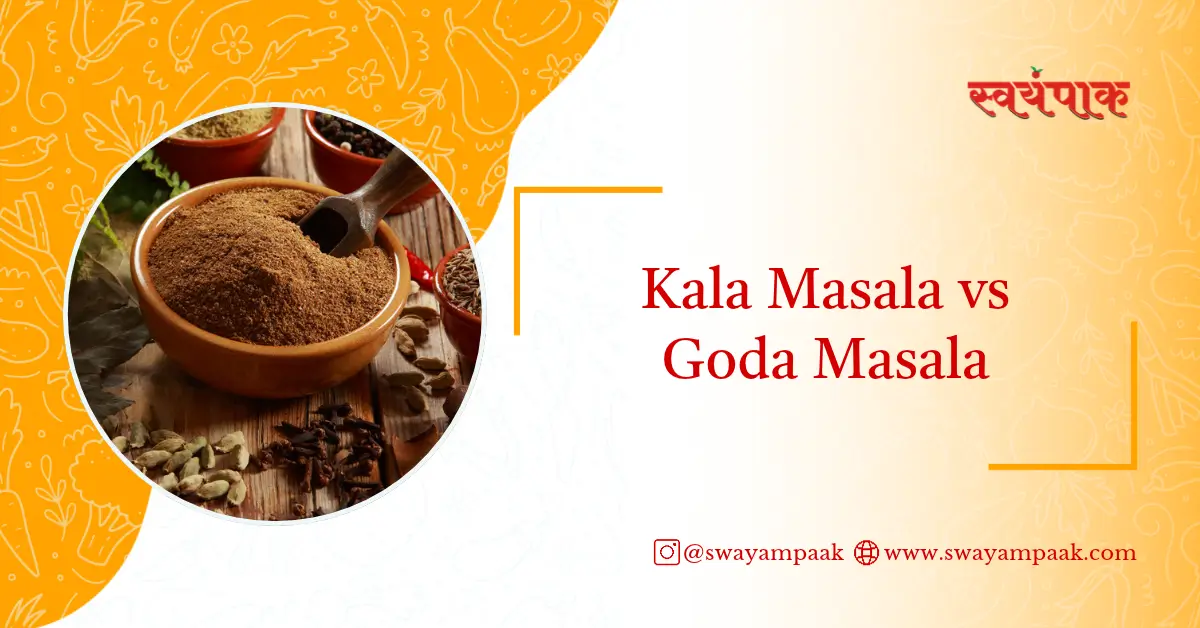
Kala masala is the darker, harder-roasted and bolder Maharashtrian blend, while goda masala is the milder, lighter and slightly sweet one. Both lean on dry coconut, sesame, and dagad phool, so the difference comes down to roast, proportions, and the kitchen each one belongs to. Khandeshi kala masala is the traditional base for dishes like shev bhaji. Goda masala belongs to everyday food like aamti and masale bhaat.
One warning before you shop. Some sources use “goda masala” and “kala masala” for the same blend, so read the ingredients, not just the label.
- What Is Kala Masala? (Khandeshi Black Masala)
- What Is Goda Masala? (Traditional Puneri Maharashtrian Masala)
- Kala Masala vs Goda Masala: Key Differences at a Glance
- Khandeshi Kala Masala vs Puneri Goda Masala: Regional Differences
- Kala Masala vs Goda Masala: Ingredients Comparison Table
- Which Dishes Are Best with Kala Masala vs Goda Masala?
- Can You Substitute Kala Masala for Goda Masala?
- How to Make Khandeshi Kala Masala at Home
- Frequently Asked Questions About Kala Masala vs Goda Masala
- Conclusion: Kala Masala vs Goda Masala, Which One Should You Pick?
What Is Kala Masala? (Khandeshi Black Masala)
Kala means black in Marathi, and the name tells you most of what you need to know. This is a dark, deeply roasted blend, and Khandesh is where it gets the most attention.
What Makes Khandeshi Kala Masala Unique?
Khandesh sits in northern Maharashtra, with towns like Jalgaon and Dhule at its centre. The cooking there is bold, and the masala does a lot of the work. Some recipe writers say kala masala gives the flavour to nearly every dish from this region.
You taste it in dubuk vade, where a fiery gravy uses kala masala as its main flavouring. You taste it in shev bhaji too, a coconut-based masala curry traditionally built on Khandeshi kala masala. So this isn’t a finishing sprinkle. It’s the backbone of the dish.
Kala Masala Ingredients: Spices, Coconut, Sesame and Aromatics
The base is roasted coconut and sesame with whole spices, including cloves, cinnamon, and stone flower. Dried red chillies bring the heat. And onion often joins the mix. One home cook explains that kala masala adds sliced, sun-dried onions to an otherwise similar spice mix.
Ranveer Brar’s Khandeshi chicken curry shows the scale of it. His masala starts with 200 g of dry coconut and four medium onions, then adds cloves, peppercorns, black cardamom and star anise. Every household tweaks this, so treat any list as a starting point.
Why Is Kala Masala Dark in Colour?
Roasting does it. Kala masala gets its name from dark-toasted coconut, which also adds a natural sweetness. The spices and coconut get roasted more deeply, and fried onions push the colour toward brownish-black. Cooks roast the spices until they turn almost black. Dark isn’t the same as burnt, though. Burnt masala tastes bitter and flat. Properly dark masala smells smoky and rich. Trust your nose.
What Does Kala Masala Taste Like?
Smoky first, then nutty, with an earthy depth underneath. The toasted coconut adds a faint sweetness, but the dark roast keeps it from tasting soft. Add chillies, and you get heat on top. It’s not a subtle blend. A little goes a long way, and that’s exactly why people love it.
What Is Goda Masala? (Traditional Puneri Maharashtrian Masala)
“Goda” means sweet in Marathi. Don’t picture sugar. Picture a warm, mild blend that makes dal and rice taste rounder.
What Makes Puneri Goda Masala Different?
Pune’s version is the one many people picture when they hear the name. The city’s traditional markets sell goda masala alongside Satara chillies and Sangli coriander. Here’s the honest part. There’s no single official Puneri recipe. The proportions change from region to region and home to home, though the basic ingredients stay the same. So “Puneri” describes a style more than a formula: mild, fragrant, and balanced.
Goda Masala Ingredients Used in Pune-Style Cooking
Coriander seeds and cumin form the base. Cloves, black pepper and cinnamon add warmth, and dry coconut and sesame add body. One widely shared recipe also uses mustard seeds, dagad phool, dried red chillies, hing, and fenugreek seeds. Other versions go further. Some add poppy seeds and cassia buds, and others add star anise and Kashmiri chillies. If a family tells you theirs is the “real” one, smile and ask for a spoonful.
Why Is Goda Masala Called “Sweet Masala”?
The sweetness comes from the ingredients, not added sugar. Coconut and sesame give the blend a nutty, creamy flavour. And the heat stays low. Most Maharashtrian blends are high on heat, but goda masala is made mostly of sweet spices. That’s why cooks often pair it with a little jaggery in dishes like aamti.
What Does Goda Masala Taste Like?
Warm, nutty, and gently aromatic. You’ll catch the cinnamon and clove first, then the roasted sesame and coconut. It’s pungent but not hot the way a chilli is. Think of it as the masala that makes a bowl of plain dal taste finished.
Kala Masala vs Goda Masala: Key Differences at a Glance
Short on time? This table gives you the quick version. The sections after it explain each row.
| Point | Kala Masala | Goda Masala |
|---|---|---|
| Colour | Dark brown to near black | Lighter brown |
| Roast | Deep, close to black | Golden to medium brown |
| Taste | Smoky, bold, earthy | Mild, nutty, gently sweet |
| Heat | Usually higher in regional dishes | Low |
| Onion | Often included | Usually not |
| Typical dishes | Shev bhaji, dubuk vade, bharit | Aamti, masale bhaat, bharli vangi |
| Strongest link | Khandesh | Pune and western Maharashtra |
Difference in Ingredients and Spice Proportions
The ingredient lists overlap a lot. What separates the two is the proportion of certain spices and how far they’re toasted. The one ingredient that can set kala masala apart is onion. One cook says her kala masala includes dried onions, while the rest of the spices stay the same as in goda. Coconut, sesame, and dagad phool show up in both.
Difference in Taste, Aroma and Colour
Goda smells sweet and nutty, like toasted sesame with a hint of cinnamon. Kala smells smoky and darker, almost like roasted coconut gone deep. In your hand, goda looks lighter, and kala looks nearly black. Put one spoonful of each in a pan, and you’ll know which is which before the oil even gets hot.
Difference in Roasting Techniques and Preparation
Both blends roast ingredients in stages. For goda, a typical method dry-roasts the coconut and sesame until golden, then roasts dagad phool and the other spices in a little oil. Kala masala goes further. You keep roasting until everything darkens, and you also dry the onion first. The risk goes up with the roast, so patience matters here.
Difference in Spiciness and Heat Level
Goda masala is the mild one. Kala masala isn’t automatically hot, since heat depends on how many chillies go in, but it’s used in fiery dishes. The Khandeshi gravy for dubuk vade, for example, is described as fiery, with kala masala as its main flavouring. If you cook for kids or don’t like heat, start with goda.
Difference in Traditional Maharashtrian Dishes
Goda masala suits aamti, masale bhaat and bharli vangi. Kala masala suits shev bhaji, dubuk vade, bharit and Khandeshi chicken curry. Think of goda as the daily masala and kala as the one you reach for when the dish needs a strong personality.
Khandeshi Kala Masala vs Puneri Goda Masala: Regional Differences
Geography shapes taste here. Khandesh and Pune are far apart, and the food shows it.
Khandeshi Masala: Bold, Dark and Deeply Roasted Flavours
Khandeshi food is rustic, and the masala matches it. Dark roast, plenty of coconut, and a strong chilli presence come with the territory. It pairs well with bhakri, bharit and thick, spicy gravies.
Puneri Goda Masala: Aromatic, Nutty and Balanced Flavours
Puneri goda is the opposite temperament. It’s tidy, fragrant and balanced, built for dal, rice and stuffed vegetables. It plays well with others and rarely takes over a dish.
Are Khandeshi Kala Masala and Puneri Goda Masala Made with the Same Spices?
Mostly, yes, but not exactly. They share a base of coconut, sesame, coriander, cumin, and whole spices. The differences come from roast level, proportions, onion, and extras like star anise or poppy seeds. Think of them as cousins, not twins.
How Do Family Recipes and Local Traditions Change Each Masala?
A lot, honestly. Proportions vary from home to home. Some families make masala in bulk every year. One cook describes her friend making about 2.5 to 3 kg each of kala masala and Maharashtrian garam masala every summer.
And the debate never fully settles. Some Marathi Brahmin cooks insist goda and kala masala are not the same blend. So when two Maharashtrian cooks disagree, both can be right.
Kala Masala vs Goda Masala: Ingredients Comparison Table
This table shows what you’ll typically find. Recipes vary by household, so use it as a guide, not a rule.
| Ingredient | Kala Masala | Goda Masala | Note |
|---|---|---|---|
| Coriander seeds | Yes | Yes | Base of both |
| Cumin | Yes | Yes | Warm, earthy note |
| Dry coconut | Yes, roasted dark | Yes, roasted golden | Roast level changes colour and taste |
| Sesame seeds | Yes | Yes | Adds nutty depth |
| Dagad phool | Often | Yes | Earthy and musky |
| Cloves, cinnamon, black pepper | Yes | Yes | Warmth and aroma |
| Dried red chillies | More, in many versions | Fewer or milder | Decides the heat |
| Onion | Often, dried or fried | Rarely | The clearest difference |
| Star anise, poppy seeds, cassia buds | Sometimes | Sometimes | Depends on the family |
Common Spices Used in Both Maharashtrian Masalas
Coriander seeds, cumin, black pepper, cloves, cinnamon, sesame, dry coconut, and dagad phool turn up in both blends. A recipe from Ruchkar Mejwani’s video lists coriander, cumin, cloves, black pepper, cinnamon, mustard, dagad phool, coconut, red chillies, hing, and sesame, and calls the result both goda and kala masala. That overlap is why the names get mixed up.
Ingredients That May Differ Between Khandeshi and Puneri Recipes
Onion is the big one for kala masala. Beyond that, look at the extras. Some goda masala recipes include poppy seeds and cassia buds. Some also use nagkeshar and niger seeds, though you can skip these. Khandeshi versions may add star anise, black cardamom or extra chillies. When a recipe includes the extras, it usually says so on the label.
The Role of Dagad Phool, Dry Coconut, Sesame and Red Chillies
Dagad phool is a lichen, also called stone flower, pathar phool, rock flower, or kalpasi. It adds the earthy, slightly musky note you can’t fake. One cook advises not skipping it if you want authentic goda masala. Dry coconut gives the sweetness and nuttiness goda masala depends on. Sesame adds body and a creamy edge. And red chillies decide the heat. Change the type or the quantity and the whole blend moves.
Which Dishes Are Best with Kala Masala vs Goda Masala?
In Maharashtrian cooking, Kala Masala and Goda Masala are both traditional spice blends, but they serve different purposes. Kala Masala is best when you want a deep, roasted, robust flavour, while Goda Masala is ideal for a warmer, sweeter, aromatic taste.
| Dish | Better choice | Why |
|---|---|---|
| Misal tarri | Kala Masala | Strong, roasted, spicy depth |
| Mutton rassa | Kala Masala | Rich, intense flavour |
| Masale bhaat | Goda Masala | Fragrant, balanced aroma |
| Amti | Goda Masala | Warm, rounded flavour |
| Bharli vangi | Either | Kala for boldness; Goda for sweetness and aroma |
| Everyday usal | Either | Depends on whether you prefer robust or mellow flavours |
Best Uses for Khandeshi Kala Masala in Curries, Usal and Bharit
Use kala masala wherever you want smoke and body. It suits dubuk vade, shev bhaji, bharit, and spicy usal. It gives Khandeshi dishes their character. Fry it in oil with onions and let it darken a little, then build the curry on top.
Best Uses for Puneri Goda Masala in Aamti, Masale Bhaat and Bharli Vangi
Goda masala fits aamti, masale bhaat and bharli vangi best. Archana’s Kitchen lists Maharashtrian masala bhaat as one of the classic uses. A spoonful stirred into dal gives it that familiar, home-style warmth. Pair it with jaggery and kokum for the classic sweet-sour balance.
Which Masala Is Better for Dal, Vegetables and Everyday Cooking?
For daily dal and mild vegetables, go with goda. It’s gentle enough for the whole family. For heavier vegetables like brinjal or sprouts, or when you want more punch, kala masala wins. Many Maharashtrian kitchens keep both and choose by the day.
Which Maharashtrian Masala Is Better for Chicken and Mutton Curry?
Kala masala, most of the time. Its deep roast stands up to meat, and Ranveer Brar’s Khandeshi chicken curry builds its masala on dry coconut and onion. If you want more heat, Kolhapuri masala goes further. If you want something mild for a family chicken curry, a small spoonful of goda adds fragrance without fire.
Can You Substitute Kala Masala for Goda Masala?
Yes, but the dish will change. The two blends are close cousins, so swapping them works better than swapping in garam masala.
Can Goda Masala Replace Kala Masala in a Recipe?
It can, and cooks do this often. One Khandeshi recipe says any stored masala you have can stand in for Khandeshi kala masala. Expect a lighter, sweeter result with less smoke. To get closer, add a pinch of red chilli powder and fry the masala a little longer in oil.
Can Kala Masala Be Used Instead of Goda Masala in Aamti?
You can, with a lighter hand. Kala masala will make the aamti darker, smokier, and hotter than usual. Start with less than the recipe calls for, then taste. A bit of jaggery and kokum will pull the balance back toward traditional aamti.
How to Adjust Spice, Roasting and Flavour When Substituting Masalas
Three things matter. Heat, roast and sweetness. Add less masala than the recipe says and build up. Fry it gently so the coconut doesn’t scorch. And taste at the end, since substitution mostly changes sweetness and smoke. You can always add more. You can’t take it out.
Kala Masala vs Goda Masala vs Garam Masala: Which Is the Best Substitute?
Here’s the order I’d use. If a recipe asks for goda, kala masala is the closest swap. If it asks for kala masala, goda is the closest swap. Garam masala is the last resort. Several Khandeshi recipes do allow it, saying store-bought masala or everyday garam masala can replace kala masala. But garam masala has no coconut or sesame, so you lose body. If you go that way, add a spoonful of toasted dry coconut.
How to Make Khandeshi Kala Masala at Home
Making kala masala takes patience more than skill. The trick is roasting in stages and never walking away from the pan.
Traditional Khandeshi Kala Masala Ingredients and Measurements
You’ll need dry coconut, onion, coriander seeds, cumin, cloves, black pepper, cinnamon, sesame, and dried red chillies. Many families also add dagad phool, star anise, or black cardamom. For a sense of scale, one Khandeshi chicken curry masala uses 200 g of dry coconut and four medium onions, with the whole spices measured in far smaller amounts.
Step-by-Step Kala Masala Roasting and Grinding Method
- Slice the onions thin and dry them completely. One cook sun-dries the sliced onions before use.
- Roast the dry coconut on low heat, stirring constantly, until it turns a deep brown. Toast coconut and sesame separately, because they need different timings from the other ingredients.
- Roast the sesame, then the whole spices, in small batches.
- Wipe the pan between batches. Any coconut left stuck to the pan will burn.
- Let everything cool completely.
- Grind in batches. Coconut and sesame release oil while grinding, so scrape down the sides.
How to Get a Dark, Smoky Flavour Without Burning the Spices?
Keep the heat low. Stir the whole time. Pull each ingredient off the heat when it smells toasted and deep, not when it starts to smoke, because the pan keeps cooking it for a minute. And don’t rush the coconut, which burns fastest. If it smells sharp or bitter, stop. Start that batch again.
Tips for Storing Homemade Kala Masala
Cool the masala fully before it touches a jar. Use a clean, dry container and a dry spoon, since that helps the masala last longer. Coconut shortens shelf life, but there’s a fix. If you roast the coconut really well, the masala keeps better. Keep it away from the stove, and fill a small jar from the big one so you aren’t opening it daily.
How to Roast Spices for a Fragrant, Nutty Goda Masala?
Methods differ. The Ruchkar recipe sautés everything in oil, cools it, then grinds it to a smooth powder. Others work in groups. They roast one batch dry, roast another batch in a little oil, then grind each batch separately. If you like control, go with the second method. Dry-roast the coconut until golden, roast the sesame, and give the dagad phool a few drops of oil. Cool everything before grinding.
Tips to Balance Sweet, Earthy and Aromatic Flavours
Taste a spoonful in a simple dal and adjust. Too much dagad phool turns the blend musky and heavy. Too much coconut makes it sweet and quick to go stale. Cloves overpower fast, so go easy. And remember that heat is optional here. Goda masala works fine with very few chillies.
How to Store Goda Masala and Preserve Its Aroma?
Use an airtight glass jar in a cool, dark cupboard. Ground masalas lose their aroma quickly, and coconut and sesame make that happen faster because both are oily. Always use a dry spoon. Make small batches if you cook rarely. A masala that smells flat is past its best, so toss it and make fresh.
Frequently Asked Questions About Kala Masala vs Goda Masala
Is Kala Masala the Same as Goda Masala?
Not exactly, though the names are often mixed up. They share a base of coconut, sesame, and spices. Kala masala is roasted more deeply, which gives it a darker colour, and some versions add onion. Goda masala is milder and lighter. Some recipe sites use the names interchangeably, so check the ingredients on the pack.
Is Goda Masala Spicy or Sweet?
Neither, quite. It’s mild and gently sweet from the coconut and sesame, not from sugar. It’s pungent but not hot like a chilli. Heat depends on the maker, so look at the chilli quantity if you’re sensitive.
What Is the Difference Between Kala Masala and Kanda Lasun Masala?
They’re different blends. One is an onion-garlic masala, and the other is the black masala. Kanda lasun masala is a fiery red blend, and its thickness adds body to gravies. Kala masala is darker, smokier, and coconut-led.
Is Khandeshi Kala Masala Hotter Than Puneri Goda Masala?
In practice, usually yes. Goda masala is the mild one, and Khandeshi dishes tend to be fiery. But heat depends on how many chillies the maker adds, so a mild kala masala or a hot goda masala can exist. Check the ingredients.
Can I Use Goda Masala for Misal Pav?
You can, but it won’t taste like classic misal. The spicy tari needs heat, and goda masala is too gentle on its own. In Kolhapuri misal, a thin spicy gravy called tari sits over the sprout usal. Most cooks use a hotter blend for that, such as Kanda Lasun or Kolhapuri masala. A pinch of goda in the usal can still add a good flavour.
Which Masala Is Traditionally Used in Maharashtrian Aamti?
Goda masala. It’s commonly used in Maharashtrian dishes like bhaji and aamti. Cooks usually finish it with jaggery and kokum.
Does Kala Masala Contain Coconut and Sesame Seeds?
Yes, in most versions. Kala masalas are built around roasted coconut and sesame. The coconut is roasted dark, and that’s a big reason for the colour and flavour.
How Long Does Homemade Maharashtrian Masala Last?
There’s no single number I can honestly give. It depends on the roast, the oil content and how you store it. Coconut and sesame shorten shelf life, and good roasting helps. Keep it in a clean, dry, airtight jar and smell it before use. If it smells flat or looks damp, replace it.
Conclusion: Kala Masala vs Goda Masala, Which One Should You Pick?
Here’s the short version. Goda masala is mild, nutty, and slightly sweet, and it belongs in your everyday dal and rice. Kala masala is darker, smokier, and bolder, and it suits strong dishes like shev bhaji, bharit, and meat curries. They share ingredients, so the roast and the kitchen they come from do most of the work.
You don’t need to choose just one. Keep both in your pantry and match them to your mood.
If you’d rather skip the roasting and grinding, Swayampaak’s Maharashtrian masalas give you a ready starting point. Try Goda Masala for daily cooking and Khandeshi Kala Masala when the dish needs a bolder finish. Cook one pot of aamti and one batch of shev bhaji this week. You’ll taste the difference on the first spoon.